|
 |
 | | | | | | |||||||||||||||||||||||||||||||||||||||||||||||||||||||||||||||||||||||||||||||||||||||||||||||||||||||||||||||||||||||||||||||||||||||||||||||||||||||||||||||||||||||||||||||||||
| | | You are in: Middle East | |||||||||||||||||||||||||||||||||||||||||||||||||||||||||||||||||||||||||||||||||||||||||||||||||||||||||||||||||||||||||||||||||||||||||||||||||||||||||||||||||||||||||||||||||||||
|
| | Tuesday, 5 November, 2002, 22:43 GMT New front in war on terror 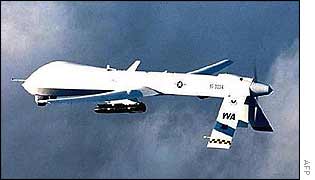 The drone could have been used to arrest the suspects
Nothing has been fully confirmed - it is that kind of a secret, shadowy war - but the basic facts of what happened seem pretty clear. An unmanned aircraft, operated by the CIA, tracked a suspect al-Qaeda vehicle in a remote corner of Yemen and then, at the command of the plane's ground controller, fired a missile which killed everyone inside.
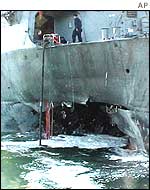
This is not a one-off shot. It is the start of a whole new chapter in a long, difficult and violent campaign that will require action of many different kinds in many different countries of the world. Yemen was being eyed by the CIA and Pentagon long before 11 September 2001. After militants attacked the USS Cole in October 2000, killing 17 sailors, Washington has seen Yemen as a hotbed of al-Qaeda activists and believes its government is either unable or unwilling to tackle them. Many of the key figures in the organisation's leadership come from Yemen. Taleban collapse Intelligence reports have pointed to their continued presence in parts of the country beyond the control of the authorities. A good many are believed to have arrived in Yemen after the collapse of the Taleban regime in Afghanistan which had sheltered them. The bombing campaign last autumn forced al-Qaeda to disperse. Pakistan was one obvious destination, Yemen another.
In part, by following the legal route. We have seen the dramatic arrests of at least two senior al-Qaeda men in Pakistan. But in some situations - like in Yemen - the American preference is to kill rather than catch its most wanted suspects. In theory, the CIA's eye-in-the-sky aircraft could have tracked the al-Qaeda car in Yemen and then the authorities could have mounted a roadblock to seize those inside. Formal charges and a court hearing could have followed, or maybe a flight to the US detention camp at Guantanamo Bay in Cuba. Clearly, the Pentagon's top brass are making a distinction depending on the circumstances. Risky policy In Yemen that choice, as described by Professor Michael Clarke of the Centre for Defence Studies in London, is to shoot first and ask questions later. Professor Clarke believes that American actions of this kind carry a big risk. They may well undermine al-Qaeda - wearing them down in a war of attrition - but they don't look good to an Arab world already hostile to much of what America is doing. The danger, with robot warplanes carrying out what amount to selected assassinations, is that the self-appointed global policeman starts to look like the global bully. The operation in Yemen was a hi-tech triumph. But what it means for America's public relations is unclear. | |
See also:  05 Nov 02 | Middle East 06 Dec 00 | Middle East 02 Nov 02 | Country profiles 30 Oct 02 | Middle East 14 Mar 02 | Middle East 05 Nov 02 | Middle East 08 Jun 02 | South Asia Top Middle East stories now: Links to more Middle East stories are at the foot of the page. | |||||||||||||||||||||||||||||||||||||||||||||||||||||||||||||||||||||||||||||||||||||||||||||||||||||||||||||||||||||||||||||||||||||||||||||||||||||||||||||||||||||||||||||||||||
| |
|  E-mail this story to a friend E-mail this story to a friend |
| |
| Links to more Middle East stories |
| | | ||
 | ||||
 | | Back to top
| ||
| ---------------------------------------------------------------------------------- To BBC Sport>> | To BBC Weather>> | To BBC World Service>> ---------------------------------------------------------------------------------- © MMIII | News Sources | Privacy |