
|
 |
 | | | | | | ||||||||||||||||||||||||||||||||||||||||||||||||||||||||||||||||||||||||||||||||||||||||||||||||||||||||||||||||||||||||||||||||||||||||||||||||||||||||||||||||||||||||||||||||||
| | | You are in: South Asia | ||||||||||||||||||||||||||||||||||||||||||||||||||||||||||||||||||||||||||||||||||||||||||||||||||||||||||||||||||||||||||||||||||||||||||||||||||||||||||||||||||||||||||||||||||||
|
| | Saturday, 8 June, 2002, 14:35 GMT 15:35 UK The rise of the drone The incident has angered Pakistan
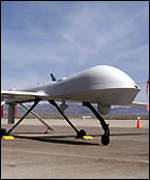
All the indications are that the Indian unmanned aerial vehicle (UAV) downed by the Pakistanis was an Israeli-built system. Israel is one of the world's leading manufacturers of UAVs - commonly known as drones - and is reported to have supplied India with a number of Hunter and Searcher systems during the late 1990s. These are essentially short-range UAVs, which can operate up to 125 kilometres (77.7 miles) from the launch point. They have an endurance of between eight to 10 hours and an operational altitude of about 16,000 feet (4.9 km). India has reported problems in operating its UAVs over high-ground, and is expected to acquire more modern Israeli systems capable of flying even higher. Sophisticated design The Hunter and Searcher share a similar design. They look like a very large model aeroplane with straight wings and a twin-boom tail.
They can carry cameras, sensors and other equipment and have been used for reconnaissance and intelligence gathering since the 1950s. But while early UAVs had only a limited range and endurance, today's most advanced systems like the American Global Hawk can loiter over the battlefield for up to 24 hours at altitudes of greater than 60,000 feet (18.3 km), providing real-time intelligence to commanders who may be a long way away from the scene of the engagement. UAVs have grown in size as well - the Global Hawk has a wing-span of about 116 feet (35.5m). Afghan role UAVs have been used in some operations in Afghanistan, which have been monitored live at the US Central Command Headquarters in Tampa, Florida. Indeed the Afghan campaign has highlighted the growing role of UAVs - not just in providing intelligence and helping to guide weapons to their targets, but in actually attacking them as well.
This is in fact the first war in which weapons have been fired from UAVs. Unmanned spy planes were developed to reduce the risk to pilots. But UAVs themselves are inevitably vulnerable, not just to ground-fire but also to the elements - the build-up of ice on wings or control surfaces has brought down a number of American UAVs both in the Balkans and probably over Afghanistan too. Paradoxically, what began as a relatively cheap system to preserve the lives of valuable pilots is fast-becoming a highly expensive asset in itself, loaded with advanced sensors and other equipment. Commanders do not want to lose them. And the Pentagon's shortage of Predators and Global Hawks is one of the reasons that a potential attack on Iraq has now been put on the back-burner, at least until operations over Afghanistan have been completed. | |
See also:  08 Jun 02 | South Asia 08 Jun 02 | South Asia 03 Mar 02 | Americas 15 Dec 01 | South Asia Internet links: The BBC is not responsible for the content of external internet sites Top South Asia stories now: Links to more South Asia stories are at the foot of the page. | ||||||||||||||||||||||||||||||||||||||||||||||||||||||||||||||||||||||||||||||||||||||||||||||||||||||||||||||||||||||||||||||||||||||||||||||||||||||||||||||||||||||||||||||||||
| |
|  E-mail this story to a friend E-mail this story to a friend |
| |
| Links to more South Asia stories |
| | | ||
 | ||||
 | | Back to top
| ||
| ---------------------------------------------------------------------------------- To BBC Sport>> | To BBC Weather>> | To BBC World Service>> ---------------------------------------------------------------------------------- © MMIII | News Sources | Privacy |









 TALKING POINT
 On the edge


