|
 |
 | | | | | | ||||||||||||||||||||||||||||||||||||||||||||||||||||||||||||||||||||||||||||||||||||||||||||||||||||||||||||||||||||||||||||||||||||||||||||||||||||||||||||||||||||||||||||||||||||||||||||||||||||||||||||||||||||||||||||||||||||||||||||||||||||||||||||||||||
| | | You are in: Middle East | ||||||||||||||||||||||||||||||||||||||||||||||||||||||||||||||||||||||||||||||||||||||||||||||||||||||||||||||||||||||||||||||||||||||||||||||||||||||||||||||||||||||||||||||||||||||||||||||||||||||||||||||||||||||||||||||||||||||||||||||||||||||||||||||||||||
|
| | Tuesday, 24 September, 2002, 22:37 GMT 23:37 UK Iraq condemns UK arms dossier 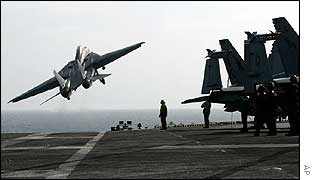 US jets are in position for a strike on Iraq Baghdad has dismissed as "lies" a UK Government dossier on Iraqi weapons programmes, and has offered international arms inspectors access to sites mentioned in it.
Iraqi President Saddam Hussein's chief adviser on weapons, General Amer al-Saadi, condemned the 50-page dossier as a "hodge-podge of half-truths and lies, that would not hold after proper investigation". Unveiling the dossier on Tuesday, UK Prime Minister Tony Blair warned that Iraq could deploy chemical and biological weapons in 45 minutes and might be only a year or two away from possessing a nuclear bomb. US Secretary of State Colin Powell welcomed the dossier and told the BBC that a new UN resolution on Iraq had to contain a threat of force, because that was the only way to keep up the pressure on Saddam Hussein. Mr Saadi dismissed the claims as "absolute nonsense" and offered United Nations weapons inspectors "unfettered access" to suspected weapons sites, including those named in the dossier.
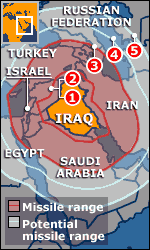
The dossier triggered new warnings of the consequences of any military action against Iraq, including statements from China and France, both permanent members of the UN Security Council. Repeated denials The dossier says Iraq "has military plans for the use of chemical and biological weapons," and has tried to acquire "significant quantities" of uranium from Africa. It alleges that Iraq still has up to 20 al-Hussein missiles with a range of 650 kilometres (400 miles), capable of carrying chemical or biological warheads, and is working to extend the range of other missiles.
Challenging the claims, the Iraqi authorities on Tuesday showed British journalists around one of the sites named in the dossier - the al-Qa Qaa complex, damaged in the 1991 Gulf War. Iraq says the site is producing only centralite, a stabiliser used in the production of conventional explosives. Iraqi Foreign Minister Naji Sabri, speaking during a visit to the Egyptian capital Cairo, said Baghdad was "ready to facilitate a visit by British experts so they can tell the world where the weapons are". Iraq has repeatedly denied allegations that it is developing weapons of mass destruction and has agreed to allow UN weapons inspectors back in for the first time since 1998. US praises Blair The US welcomed the 50-page dossier. White House spokesman Ari Fleischer said the dossier's information was "frightening in terms of Iraq's intentions and abilities to acquire weapons". US Secretary of State Colin Powell told the BBC that the US would continue to press the UN for a tough new resolution ordering Iraq to comply with weapons inspections, or face military action. He said: "If there are no consequences, Iraq will continue to misbehave. "Inspectors must be able to go into Iraq under a new resolution. They must be able to go any place, at any time. "If the UN fails to act, you cannot expect us to ignore that failure if we feel that we are still being threatened."
But analysts said the dossier did not contain much new evidence on the alleged Iraqi threat, and Israeli Government spokesman Avi Pazner said it was "not new for us, it is no surprise". The Chinese Prime Minister, Zhu Rongji, warned that any attack on Iraq without a UN mandate would lead to unspecified "severe consequences". France also restated its reservations about using military force. President Jacques Chirac said: "I don't believe that war is unavoidable. "I still think it's the worst solution, and we should do everything to agree the only solution - that Iraq accepts unconditionally the return of inspectors." The Malaysian Prime Minister, Mahathir Mohamad, urged the British and Americans to listen to the rest of the world. "I certainly do not like the idea of pre-emptive strikes in order to prevent possible acts of terror, because if there is going to be a pre-emptive strike then who makes the decision?" he said. Russia also stressed that UN weapons inspectors should go to Iraq and look for hard evidence on the ground. "Only experts can determine whether Iraq has weapons of mass destruction," said Russian Foreign Ministry spokesman Alexander Yakovenko. Most computers will open this document automatically. You may need to download Adobe Acrobat Reader to open this PDF document. | |
See also:  24 Sep 02 | Politics 24 Sep 02 | Politics 24 Sep 02 | Politics 24 Sep 02 | UK 24 Sep 02 | Politics 24 Sep 02 | Americas 24 Sep 02 | Europe Internet links: The BBC is not responsible for the content of external internet sites Top Middle East stories now: Links to more Middle East stories are at the foot of the page. | ||||||||||||||||||||||||||||||||||||||||||||||||||||||||||||||||||||||||||||||||||||||||||||||||||||||||||||||||||||||||||||||||||||||||||||||||||||||||||||||||||||||||||||||||||||||||||||||||||||||||||||||||||||||||||||||||||||||||||||||||||||||||||||||||||
| |
|  E-mail this story to a friend E-mail this story to a friend |
| |
| Links to more Middle East stories |
| | | ||
 | ||||
 | | Back to top
| ||
| ---------------------------------------------------------------------------------- To BBC Sport>> | To BBC Weather>> | To BBC World Service>> ---------------------------------------------------------------------------------- © MMIII | News Sources | Privacy |