|
 |
 | | | | | | |||||||||||||||||||||||||||||||||||||||||||||||||||||||||||||||||||||||||||||||||||||||||||||||||||||||||||||||||||||||||||||||||||||||||||||||||||||||||||||||||||||||||
| | | You are in: Middle East | |||||||||||||||||||||||||||||||||||||||||||||||||||||||||||||||||||||||||||||||||||||||||||||||||||||||||||||||||||||||||||||||||||||||||||||||||||||||||||||||||||||||||||
|
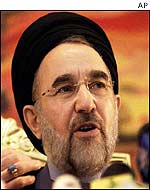
| | Sunday, 28 July, 2002, 06:18 GMT 07:18 UK Iranian reformists issue warning 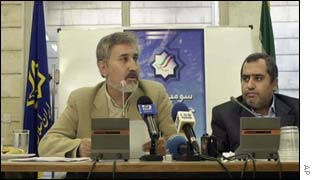 Khatami said his party might stop participating
The biggest pro-reform party in Iran has threatened to pull out of the official power structure unless the entrenched right-wing minority stops blocking moves towards change. The Participation Front, the largest faction in the reform coalition which dominates the Iranian parliament, said that if it withdraws from official politics, the Islamic regime would be deprived of its legitimacy and credibility.
If they withdrew from parliament it would be paralysed, precipitating a major constitutional crisis. Despite their control of both the presidency and parliament, the reformists have made little headway against hard-line conservatives who control key institutions and have largely managed to block political change. The warning comes at a time when reformists are deeply frustrated at their failure to implement the policies they were massively elected to enact. Speaking at a news conference to launch the Participation Front's annual statement, its leader, Mohammed Reza Khatami, who is the president's brother, said the current situation was extremely unstable. The rift between the public and its rulers, he said, was gradually being transferred to within the system. Three ways He went on to say that there were only three options: the overthrow of the regime, dictatorship, or reform.
He said that this would deprive the Iranian regime of the popular legitimacy and credibility the reformists had conferred on it by winning a massive vote from the people. "Our continued participation in power and in the state is conditional on the realisation of the demands and rights of people," Mr Khatami said. "Otherwise we will reach the point of decision, and continue our activities from outside the structure, leaving a power which lacks a sufficient base of legitimacy." Mr Khatami said that the "dual authority" which had arisen within the system had paralysed the state and was also crippling its foreign policy. He said Iran's relations with the United States were of enormous importance, and that Iran should follow its national interest and defuse its crisis with Washington. Religious rule All of this was directly in contradiction to everything the country's supreme leader, Ayatollah Ali Khamenei had to say in a speech on Saturday to officials in charge of Friday prayers. The Americans, he said, were out to destroy the Islamic Republic. "Having given up hope of exerting military or economic pressure, the enemy is trying to drive a wedge betwween the system and the public, using a propaganda war to make people disillusioned in the Islamic system," he said. The Ayatollah condemned those who saw "capitulating to American bullying" as some sort of "opportunity", and he warned that guided by God, he would use his powers to intervene if any of the three constitutional powers in Iran - the government, the judiciary or the parliament - tried to divert the system from what he called "its true path". President Khatami has several times said he too would leave office if he concluded that the reform process had become immovably blocked. But he has remained silent on many of the contentious issues of the day, and is the subject of mounting pressure from within the reform movement to be more assertive or stand down. The contradiction is clear, between the hardliners who believe power and authority come from God, and the frustrated reformists who believe it comes from the people. The contradiction is becoming increasingly stark and seems to be coming gradually to a head. | |   See also: 20 Apr 02 | Middle East 26 Jul 02 | Middle East 22 Jul 02 | Middle East 24 Jul 02 | Middle East 12 Jul 02 | Middle East 19 May 02 | Middle East 08 Feb 02 | Country profiles Internet links: The BBC is not responsible for the content of external internet sites Top Middle East stories now: Links to more Middle East stories are at the foot of the page. | |||||||||||||||||||||||||||||||||||||||||||||||||||||||||||||||||||||||||||||||||||||||||||||||||||||||||||||||||||||||||||||||||||||||||||||||||||||||||||||||||||||||||
| |
|  E-mail this story to a friend E-mail this story to a friend |
| |
| Links to more Middle East stories |
| | | ||
 | ||||
 | | Back to top
| ||
| ---------------------------------------------------------------------------------- To BBC Sport>> | To BBC Weather>> | To BBC World Service>> ---------------------------------------------------------------------------------- © MMIII | News Sources | Privacy |