|
 |
 | | | | | | |||||||||||||||||||||||||||||||||||||||||||||||||||||||||||||||||||||||||||||||||||||||||||||||||||||||||||||||||||||||||||||||||||||||||||||||||||||||||||||||||
| | | You are in: Middle East | |||||||||||||||||||||||||||||||||||||||||||||||||||||||||||||||||||||||||||||||||||||||||||||||||||||||||||||||||||||||||||||||||||||||||||||||||||||||||||||||||||
|
| | Friday, 12 July, 2002, 15:01 GMT 16:01 UK Khamenei moves to ease tension 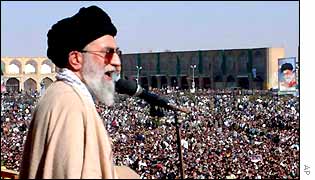 Ayatollah Khamenei asked people to stay calm Iran's supreme spiritual leader, Ayatollah Ali Khamenei, has moved to calm tensions after a prominent cleric resigned in a bitter protest against corruption in public life. He said he agreed with some of the strong criticisms contained in Ayatollah Jalaluddin Taheri's letter of resignation.
The BBC's Tehran correspondent Jim Muir says the spiritual leader's public intervention in the affair is a highly unusual step. His statement was issued just before Friday prayers and broadcast repeatedly on state radio as well as being read out in the main mosque in Isfahan, Ayatollah Taheri's power base. Mosques quiet Fears that the row would lead to disturbances at the prayers proved unfounded as few of Ayatollah Taheri's supporters turned up at the mosque where he usually leads the prayers.
Ayatollah Taheri resigned on Tuesday, denouncing the way Iran was being run and creating a political storm. The Supreme National Security Council later banned the country's media from reporting reaction to his comments. But in his letter on Friday, Ayatollah Khamenei told Ayatollah Taheri that he supported some of his criticisms. Frustration "I also have been saying for several years that we have to mobilise all possible means to fight poverty and corruption," Ayatollah Khamenei said. Unlike the resignation letter, which was passionate and bitter in tone, the leader's reply was low-key and conciliatory and evidently concerned to preserve unity.
Our correspondent notes that Ayatollah Taheri's attack comes amid mounting frustration among Iran's reformists. Despite controlling both the presidency and parliament after massive election victories, their attempts to bring about fundamental change have failed. A hard-line conservative minority remains powerful, more than 20 years after an Islamic revolution overthrew the ruling shah. Ayatollah Taheri listed "deception, unemployment, inflation, the diabolical gap between the rich and poor, bribery, cheating, growing drug consumption, the incompetence of authorities and the failure of the political structure" as reasons for his resignation. His attack coincided with the anniversary of the July 1999 student unrest, which saw thousands of people take to the streets of Tehran and other cities on Tuesday in defiance of a government ban. | | See also:  11 Jul 02 | Middle East 10 Jul 02 | Middle East 09 Jul 02 | Middle East 02 Jul 02 | Middle East 16 May 02 | Middle East 08 Feb 02 | Country profiles 08 Aug 01 | Middle East Internet links: The BBC is not responsible for the content of external internet sites Top Middle East stories now: Links to more Middle East stories are at the foot of the page. | |||||||||||||||||||||||||||||||||||||||||||||||||||||||||||||||||||||||||||||||||||||||||||||||||||||||||||||||||||||||||||||||||||||||||||||||||||||||||||||||||
| |
|  E-mail this story to a friend E-mail this story to a friend |
| |
| Links to more Middle East stories |
| | | ||
 | ||||
 | | Back to top
| ||
| ---------------------------------------------------------------------------------- To BBC Sport>> | To BBC Weather>> | To BBC World Service>> ---------------------------------------------------------------------------------- © MMIII | News Sources | Privacy |