|
 |
 | | | | | | |||||||||||||||||||||||||||||||||||||||||||||||||||||||||||||||||||||||||||||||||||||||||||||||||||||||||||||||||||||||||||||||||||||||||||||||||||||||||||||||||||||||||||
| | | You are in: Middle East | |||||||||||||||||||||||||||||||||||||||||||||||||||||||||||||||||||||||||||||||||||||||||||||||||||||||||||||||||||||||||||||||||||||||||||||||||||||||||||||||||||||||||||||
|
| | Thursday, 11 July, 2002, 16:22 GMT 17:22 UK Iran press gagged after cleric's attack Blank spaces replace newspaper reports on Taheri
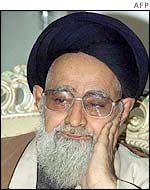
A political storm has escalated in Iran, following the resignation on Wednesday of a leading cleric, Ayatollah Jalaluddin Taheri, who issued a bitter condemnation of the way the country is being run. The Supreme National Security Council, which has decision-making powers on key national issues, has banned Iranian newspapers from writing about the affair, which has heightened the atmosphere of confrontation between reformists and hard-liners within the Islamic regime.
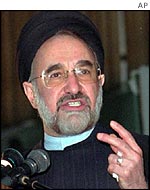
In an indication of the sensitivities stirred by Ayatollah Taheri's blistering denunciation of the powers that be, the council said its directive was being issued "in order to preserve the calm, unity and national security of the country". Khatami doubts The council brings together key figures from all branches of the system and is chaired by the reformist president, Mohammad Khatami.
But the directive was issued by the council's secretariat, which is headed by a conservative, and it was not clear whether President Khatami had personally approved the move. Normally, such directives would remain confidential. But the main reformist newspaper, Norouz, published the text and a facsimile of the directive. It also published large blank spaces where it had been planning to carry articles covering reaction to the resignation, including a statement by 125 members of parliament supporting Ayatollah Taheri. Reforms urged A number of conservative newspapers carried items covering reaction to Ayatollah Taheri's resignation letter. But they may well have gone to press before the council's directive was circulated.
The reformists have clearly been emboldened by the affair. In an article in Norouz entitled: "How much longer will this wound go untreated?", one of the main reformist strategists, Abbas Abdi, called on President Khatami to insist on a referendum on the reform process, or to resign if his opponents refused. He said the country's decision-making process had been paralysed by the cleavage in ruling circles and argued that things could not get worse. "You can't get blacker than black," he said. "The state institutions are trying to neutralise each other instead of working in harmony," Abdi wrote. "The country's foreign policy is in crisis. The decision- making system of the country is paralysed because there is no such thing as one homogenous governing system." The reformists, who control both the presidency and the parliament after massive election victories, have reached a high point in frustration, after five years of seeing their attempts to bring about change being stymied by an entrenched hard-line minority. Letter disputed Right-wing newspapers cast doubt on the authenticity of Ayatollah Taheri's unprecedented resignation statement. They suggested that the reformists themselves had taken advantage of the Ayatollah, who is elderly and unwell, and had either forced him to sign the resignation letter or made it up themselves. But a spokesman at the Ayatollah's office in Isfahan said the statement had been written by Ayatollah Taheri himself, in his own hand. In his resignation declaration, the Ayatollah delivered a stunning indictment of those running the country, accusing them of corruption, hypocrisy, repression and deviating from the true path of Islam. Spotlight on clergy Taheri's dramatic resignation shifted the focus of the ongoing and intensifying struggle between reformists and entrenched hard-liners firmly onto the role of the clergy, who seized many of the levers of power after the 1979 revolution.
It appeared to reflect a growing concern among some clerics that they may all become tarred with the brush of public disapproval if the regime does not do more to meet the expectations of the millions of people who have voted consistently for reform and change over the past five years. The role of the clergy was already under scrutiny when the latest crisis began. A liberal writer, Hashem Aghajari, is being controversially prosecuted for remarks he made in a recent speech calling for a reformation of the clerical establishment and criticising those who blindly follow the prescriptions of Shia religious leaders. Right-wing clerics and their supporters demanded Aghajari's punishment. Some said he was worse than the British author Salman Rushdie, who was the object of a death ruling or fatwa issued by the father of the Islamic revolution, Ayatollah Khomeini, in 1989. The Aghajari case has become a cause celebre for both sides. Hard-liners accused their reformist rivals of manipulating Ayatollah Taheri and creating a crisis in order to sideline the Aghajari affair. | | See also:  10 Jul 02 | Middle East 09 Jul 02 | Middle East 02 Jul 02 | Middle East 16 May 02 | Middle East 17 Mar 02 | Middle East 08 Feb 02 | Country profiles 08 Aug 01 | Middle East Top Middle East stories now: Links to more Middle East stories are at the foot of the page. | |||||||||||||||||||||||||||||||||||||||||||||||||||||||||||||||||||||||||||||||||||||||||||||||||||||||||||||||||||||||||||||||||||||||||||||||||||||||||||||||||||||||||||
| |
|  E-mail this story to a friend E-mail this story to a friend |
| |
| Links to more Middle East stories |
| | | ||
 | ||||
 | | Back to top
| ||
| ---------------------------------------------------------------------------------- To BBC Sport>> | To BBC Weather>> | To BBC World Service>> ---------------------------------------------------------------------------------- © MMIII | News Sources | Privacy |