|
 |
 | | | | | | ||||||||||||||||||||||||||||||||||||||||||||||||||||||||||||||||||||||||||||||||||||||||||||||||||||||||||||||||||||||||||||||||||||||||||||||||||||||
| | | You are in: In Depth: Cracking Crime | ||||||||||||||||||||||||||||||||||||||||||||||||||||||||||||||||||||||||||||||||||||||||||||||||||||||||||||||||||||||||||||||||||||||||||||||||||||||||
|
| |  Monday, 16 September, 2002, 10:46 GMT 11:46 UK Monday, 16 September, 2002, 10:46 GMT 11:46 UK Hi-tech armoury in war against crime 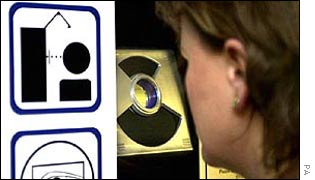 Retinal scanning has been trialled at Heathrow Airport
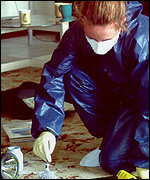
The Hollywood blockbuster Minority Report gave us a glimpse of future crime fighting and security. Police forces across the UK are not quite ready to employ psychics just yet, but policing techniques have been revolutionised in recent years, with some of the features of sci-fi films only a stone's throw away. Traditional detectives are being replaced by an altogether new breed of crime fighter, whose investigations are as much about sifting through cyber information on super computers as carrying out interviews at the crime scene. Genetic profiles The National DNA database, established by the Forensic Science Service in 1995, is the beginning of what will one day become a vast databank of information on the public. Its goal is to match DNA samples from crime scenes to individuals and other crimes. It currently contains the genetic profiles of over 1.7 million people and 150,000 profiles found at crime scenes. And with more than �180m earmarked for its expansion, it is likely to become the principal tool in serious crime investigation in the future.
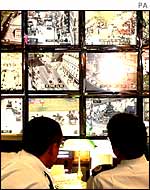
As in Minority Report, the science of Biometrics is another method of identifying people by their unique human attributes. Fingerprints, retinal scanning and hand geometry analysis is set to become the natural successor in the security industry. International airlines are looking to introduce self-service check-in counters using fingerprint and facial scanning. Virgin Atlantic and British Airways launched a biometrics trial at Heathrow airport earlier this year which could lead to the implementation of 'fast-track' airport immigration. And the technology could also lead to biometric profiles on microchips embedded in credit cards and passports. Big brother But the benefit of biometric identification which monitors the public 24 hours a day has already been harnessed. We are all caught on CCTV over 200 times during an average day. And now a new generation of cameras will provide authorities with sharper images than ever before and the opportunity to scan faces of the public to match with convicted criminals.
Police also monitor offenders on non-custodial sentences in the community with electronic tagging. A tracking device worn on an offender's wrist or ankle sends a signal via global positioning satellites (GPS) to police, who are able to monitor their location 24 hours a day. The system has been used widely in the United States for the last 10 years and so far in this country only 2% of tagged offenders have re-offended. The same technology is used to track and retrieve stolen vehicles. Tagging children More controversially, parents are looking for a way to apply the technology to monitor their children. The theory is that missing children could be traced by a microchip implanted in an arm, leading to less abductions. The technology may already exist but innovations still face obstacles.
Civil liberties campaigners argue that human rights are being pushed aside, in favour of a big brother-type approach. And debate is growing over the decision by the European Parliament to let law enforcers spy on phone and internet users. Campaigners have criticised the move, which will force phone companies and net service providers to keep customer logs for several years. The proposed law is similar to the government's Regulation of Investigatory Powers Act, which allows authorities to access private information about people's habits on the internet and telephone. A new report has slammed the act and gives the UK the prize for being the worst privacy spies. The study, by Privacy international and the Electronic Privacy Information Centre, accuses Britain of one of the worst records for mass surveillance. Liberties groups claim the public right to privacy is being eroded. And with increased security concerns after the terror attacks on America last September, these claims are difficult to ignore. | |
See also:  Internet links: The BBC is not responsible for the content of external internet sites | ||||||||||||||||||||||||||||||||||||||||||||||||||||||||||||||||||||||||||||||||||||||||||||||||||||||||||||||||||||||||||||||||||||||||||||||||||||||
|  |
|  E-mail this story to a friend E-mail this story to a friend |
| |
| Links to more Cracking Crime stories |
| | | ||
 | ||||
 | | Back to top
| ||
| ---------------------------------------------------------------------------------- To BBC Sport>> | To BBC Weather>> | To BBC World Service>> ---------------------------------------------------------------------------------- © MMIII | News Sources | Privacy |