|
 |
 | | | | | | ||||||||||||||||||||||||||||||||||||||||||||||||||||||||||||||||||||||||||||||||||||||||||||||||||||||||||||||||||||||||||||||||||||||||||||||||||||
| | | You are in: In Depth: dot life | ||||||||||||||||||||||||||||||||||||||||||||||||||||||||||||||||||||||||||||||||||||||||||||||||||||||||||||||||||||||||||||||||||||||||||||||||||||||
|
| |  Monday, 3 February, 2003, 12:10 GMT Monday, 3 February, 2003, 12:10 GMTHey - bet you'll like this 
 That's because the computer systems which choose ads are becoming smart enough to work out what it is that each user probably wants. As traditional media such as newspapers, magazines and television have mass audiences, advertisers look at general figures such as the sex, age and socio-economic group of typical readers or viewers to decide whether or not it is worth placing an ad. But on the internet, they can be far more targeted in their approach, using information revealed as each user browses to present ads that they hope will attract attention. Read between lines By clicking on a webpage, you reveal that you are interested in its content. It's a pretty good bet that the readers of a football match report are interested in the sport. Thus an ad for replica team shirts or World Cup videos would be more appropriate than one for golf clubs or a new car.
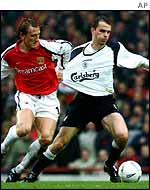
The answer is by developing computer software which "understands" the meaning of articles so that appropriate ads can be selected - but this is not as simple as it sounds. While we can read information and summarise its content, computers find this very hard indeed. Consider an article about Arsenal playing Liverpool, in which the Gunners' star striker has several shots, none of which trouble the Liverpool keeper. A child could tell that this is about a game of football between two of England's leading clubs, but how is a computer to know? "Arsenal", "Gunners" and "shots" could indicate the story is about guns, perhaps in Liverpool, "star" could indicate astronomy or astrology, whilst "keeper" could refer to a zookeeper, who may in some way be in trouble. Context is all Software companies like Los Angeles-based Applied Semantics are tackling this problem by building up huge databases of words or phrases and their relationships to each other using computerised knowledge bases and a team of lexicographers and computational linguists. The word "pool" can mean a swimming pool, a game like snooker, or a sum of money made up of many individual contributions. But terms such as diving board and deep end help establish which meaning of "pool" is intended. This process is known as disambiguation.
A further stage, called linguistic processing, links the words to try to establish their meaning. After this stage, it is possible to determine that the article is indeed about a football match. As a safeguard to prevent inappropriate or offensive ads appearing, filters can detect the meaning of certain types of stories, such as those about human deaths. A story containing the words "plane" and "victims" may be about a crash, and the software can be set to prevent ads for discount airline tickets being displayed. Come and buy How effective are these systems? According to Applied Semantics, untargeted ads get clicked on by about one person in 300, whilst one in 13 click on the more targeted ads that have been selected by its AdSense system.
While such tactics are unsuitable for print media advertisers, in the not too distant future it may well be possible for TV advertisers to follow suit. Video recorders such as the Tivo machine already build up an idea of the type of programmes the owner is interested in and records similar shows automatically. A future device could record ads based on this profile, and insert these into shows it records. While the idea of a machine second-guessing your purchases may not appeal, the days of teenagers sniggering through ads aimed at their ageing parents may finally become a thing of the past. Every Monday Dot.life looks at how technology has changed our lives, and more importantly how we would like to change our lives. Let us know your views, using the form below. Disclaimer: The BBC will put up as many of your comments as possible but we cannot guarantee that all e-mails will be published. The BBC reserves the right to edit comments that are published. | |
See also:  09 Aug 02 | Technology 14 Aug 02 | Technology 26 Nov 01 | dot life 28 Sep 00 | UK Top dot life stories now: Links to more dot life stories are at the foot of the page. | ||||||||||||||||||||||||||||||||||||||||||||||||||||||||||||||||||||||||||||||||||||||||||||||||||||||||||||||||||||||||||||||||||||||||||||||||||||
 | |
|  E-mail this story to a friend E-mail this story to a friend |
|  |
| Links to more dot life stories |
| | | ||
 | ||||
 | | Back to top
| ||
| ---------------------------------------------------------------------------------- To BBC Sport>> | To BBC Weather>> | To BBC World Service>> ---------------------------------------------------------------------------------- © MMIII | News Sources | Privacy |