|
 |
 | | | | | | |||||||||||||||||||||||||||||||||||||||||||||||||||||||||||||||||||||||||||||||||||||||||||||||||||||||||||||||||||||||||||||||||||||||||||||||||||
| | | You are in: In Depth: dot life | |||||||||||||||||||||||||||||||||||||||||||||||||||||||||||||||||||||||||||||||||||||||||||||||||||||||||||||||||||||||||||||||||||||||||||||||||||||
|
| |  Monday, 9 September, 2002, 10:54 GMT 11:54 UK Monday, 9 September, 2002, 10:54 GMT 11:54 UK Computer games start thinking 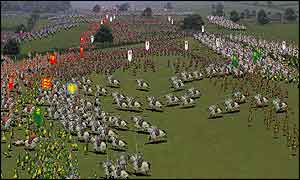 Epic battles are fought with the aid of a Chinese sage
 For many they are a refuge from the real world because they present us with problems we will never encounter, yet are much easier to resolve than those we do come across. Reality offers few of us the chance to found an empire and protect it by waging war on anyone we want, or marrying off our children to keep the dynasty going. But this separation is starting to break down. Not least because some game makers are turning to real life and insights into the intricacies of human psychology provided by ancient and modern philosophers to make their creations more fun to play. Fighting talk The makers of Medieval: Total War have drawn on the writings of ancient Chinese philosopher Sun Tzu to inform the artificial intelligence (AI) controlling the games computer players. Medieval spans the period from 1066 to 1483 and lets players take on the role of almost any ruler of the time and try to establish and defend their empire from plague, barbarian invaders, and political and religious intrigue.
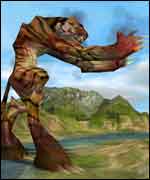
The original Art of War is thought to have been written around 500 BC when Chinese states were perennially in conflict. Sun Tzu himself is thought to be a military strategist and general who served the state of Wu. "He wrote large sections of it as concrete rules," said Mr de Plater. "We have built these straight into the AI." The rules give advice on what to do if enemies are approaching over bridges, how to outflank, when to press home an advantage and how to fight cautious and rash opponents. In play-testing Mr de Plater said the AI has surprised them all by staging ambushes, false retreats and using other complex tactics. But, he said, there was one battle in which the AI's sense had to be curbed. "One of the hard things was to make the AI as stupid as the French were at Agincourt," he said. Social struggle Even more ambitious is the artificial intelligence being built into a game called Dimitri from Lionhead Studios. Lionhead is best known for its ground-breaking Black&White game which gave players the task of gathering a nation of followers and training a huge creature to do their bidding. Dimitri is set in a small town and the computer-controlled characters are given more realism by establishing a common set of social rules defining what is acceptable or unacceptable in given situations. Such subtlety has usually been lacking in other games.
Social processes act like a moral fog that envelops all the characters and lets them choose what to do in certain situations. "What is interesting about these processes is that they are very different," said Mr Evans. "Some last only 20 minutes while others go on for the rest of your life." He said social processes act as an organising framework for our knowledge and let us know which facts are important at particular times. "You cannot get married just by saying 'I do'," he said. "They are just empty words unless said within a marriage ceremony." Mr Evans said the writings of philosophers Martin Heidegger and Ludwig Wittgenstein had inspired him to try to instil computer-created characters with an understanding of social mores. In the computer world the social processes are made explicit as lines of computer code; in the real world they are a shared, unspoken framework that we all react to but rarely make explicit. In real life this shared framework helps us get on with our lives, in the computer world it is already driving dramatic results. Mr Evans said early testing of Dimitri placed two rival gangs in a bar. In such a situation the gang members would usually try to impress others by intimidating the patrons or vandalising the bar. But when the two groups met, the attempts to impress got out of hand and ended in a huge brawl. The fight was not planned, it just emerged. Human society This work looks frivolous but it could be profoundly important. Wittgenstein thought that human society, knowledge and language was hollow, little more than a tentative agreement that we all accept. Both Heidegger and Wittgenstein were influential on the existentialists who asserted that man was alone in making his way in the world. It could also mean that AI in computer games could help us realise that the world has no meaning except that which we choose to impose on it. We may be nothing but the imagination of ourselves. Suddenly computer games are looking very serious indeed. | |
See also:  24 Mar 01 | Entertainment 12 Sep 01 | Science/Nature 25 Jun 02 | Science/Nature 18 May 01 | Entertainment 16 Apr 01 | UK 11 Aug 98 | Education 31 May 01 | Entertainment Internet links: The BBC is not responsible for the content of external internet sites Top dot life stories now: Links to more dot life stories are at the foot of the page. | |||||||||||||||||||||||||||||||||||||||||||||||||||||||||||||||||||||||||||||||||||||||||||||||||||||||||||||||||||||||||||||||||||||||||||||||||||
| |
|  E-mail this story to a friend E-mail this story to a friend |
|  |
| Links to more dot life stories |
| | | ||
 | ||||
 | | Back to top
| ||
| ---------------------------------------------------------------------------------- To BBC Sport>> | To BBC Weather>> | To BBC World Service>> ---------------------------------------------------------------------------------- © MMIII | News Sources | Privacy |