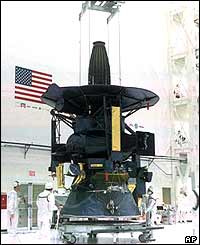
1 of 11 The Galileo probe has travelled almost three billion miles since its launch in 1989
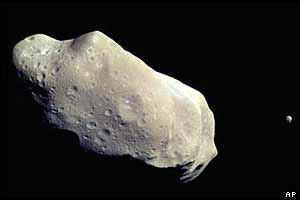
2 of 11 243 Ida is an asteroid orbiting the sun between Mars and Jupiter - it became the second of only four asteroids studied up close when Galileo encountered it in 1993
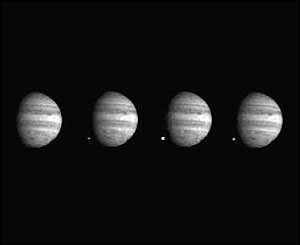
3 of 11 Galileo has been carrying out its lonely tour of Jupiter, the largest planet in our solar system, for eight years
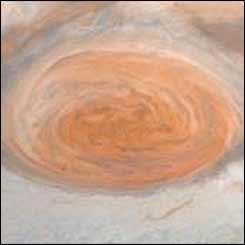
4 of 11 Jupiter's famous red spot is a storm of massive proportions that has been raging on the surface of the gas giant for hundreds of years
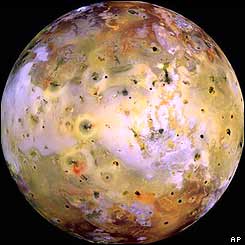
5 of 11 Io, the innermost of Jupiter's Galilean moons, is slightly larger than our own moon and primarily composed of molten silicate rock
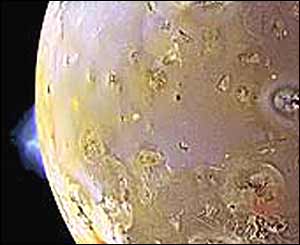
6 of 11 Galileo was able to send back fantastic images of sulphur plumes erupting from the moon's surface into space
7 of 11 The sun sets on the Loki volcanic area on Io - Loki is said to be the most powerful volcano in the solar system - emitting more heat than all of Earth's volcanoes combined
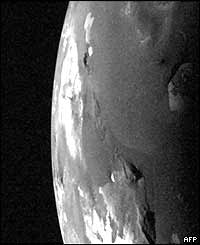
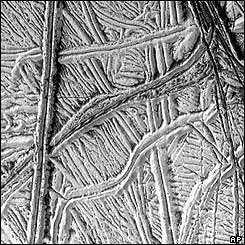
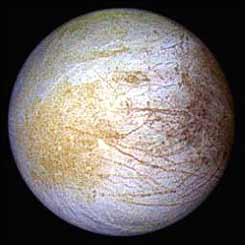
8 of 11 In stark contrast the surface of Europa is believed to be covered in a layer of ice
9 of 11 The moon's smooth surface has led to speculation that underneath the sheath of ice lays a life-sustaining liquid sea
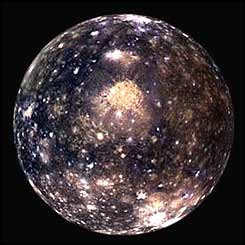
10 of 11 This pockmarked yet beautiful surface is that of the moon Callisto - the most crater-covered satellite in the solar system
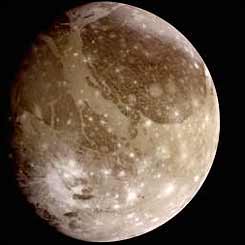
11 of 11 Ganymede, the largest moon in the solar system, is the first moon discovered to have its own magnetic field - another first for Galileo


 One-Minute World News
  News services
 E-mail this to a friend