|
 |
 | | | | | | ||||||||||||||||||||||||||||||||||||||||||||||||||||||||||||||||||||||||||||||||||||||||||||||||||||||||||||||||||||||||||||||||||||||||||||||||||||||||||||||||
| | | You are in: In Depth: Brazil Journey | ||||||||||||||||||||||||||||||||||||||||||||||||||||||||||||||||||||||||||||||||||||||||||||||||||||||||||||||||||||||||||||||||||||||||||||||||||||||||||||||||||
|
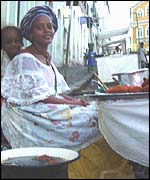
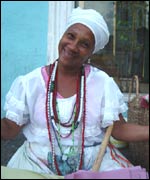
| |  Tuesday, 17 September, 2002, 17:24 GMT 18:24 UK Tuesday, 17 September, 2002, 17:24 GMT 18:24 UK Street vendors fight for fritter monopoly 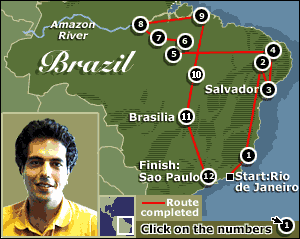 Report three: Salvador As Brazil gears up for presidential elections in October, BBC Brasil's Paulo Cabral travels through remote mountains, arid countryside and deep jungle to find out what 21st Century politics mean in the Brazil that normally goes unreported. The "baianas" of Salvador hope the election will give them a chance to secure a monopoly on the regional dish they sell in the city's streets.
Clarice dos Anjos, president of the Baianas of Acaraje Association (ABA), says the group is backing electoral candidates which have promised to take to Congress a bill that forbids the selling of acaraje in markets and restaurants. "This is a big shots' fight, because some politicians are also restaurant owners," she says. "We want a law that guarantees that acaraje can only be sold in the traditional way, from the baiana's board." Clarice told me the main weapons of the baianas in their struggle are "the quality of the service and the tradition of the white dress and the board".
In these elections, the ABA president says she would rather support candidates who are from the current government coalition. "I'm concerned about who might help my work sector," she says. "I can't support the opposition, because it's the current government that is able to solve our problems for now. If one day the opposition gets there, we will change our support as well." Competition Clarice said that the selling of acaraje has changed over time. Historically, it was linked to African and religious traditions, but now has become a livelihood in its own right.
Margarita Souto, one of the baianas, has been selling acaraje for 45 years in the historic centre of Salvador. She complained that business has become harder in recent years. "There are a lot of people selling acaraje. Today, if I take 20 Brazilian reals [about �4], I raise my hands to thank to heaven," she says. The wooden board veteran does not believe that the presidential elections can help to improve the life of the baianas. "It won't change anything, everything will stay the same." Optimism Another baiana, Angelica de Oliveira, who has spent 32 years in the business, also wants limits on who sells the traditional dish. "Otherwise, the baianas will soon be finished," she said.
Hoqueline Reis, 25, has been selling acaraje since she was 12. She says the baianas need permission to sell their wares in prime spots and better treatment by the city's authorities. Hoqueline says she has not yet chosen her candidates. But, unlike her older colleagues, she is more optimistic about the elections. "I do hope things get better. I don't know if they will, but I hope so," she said. | |
See also:  20 Aug 02 | Americas 19 Jul 02 | Americas Internet links: The BBC is not responsible for the content of external internet sites Top Brazil Journey stories now: Links to more Brazil Journey stories are at the foot of the page. | ||||||||||||||||||||||||||||||||||||||||||||||||||||||||||||||||||||||||||||||||||||||||||||||||||||||||||||||||||||||||||||||||||||||||||||||||||||||||||||||||
| |
|  E-mail this story to a friend E-mail this story to a friend |
| |
| Links to more Brazil Journey stories |
| | | ||
 | ||||
 | | Back to top
| ||
| ---------------------------------------------------------------------------------- To BBC Sport>> | To BBC Weather>> | To BBC World Service>> ---------------------------------------------------------------------------------- © MMIII | News Sources | Privacy |