
|
 |
 | | | | | | ||||||||||||||||||||||||||||||||||||||||||||||||||||||||||||||||||||||||||||||||||||||||||||||||||||||||||||||||||||||||||||||||||||||||||||||||||||||||||||||||||||||||||||||||
| | | You are in: Health | ||||||||||||||||||||||||||||||||||||||||||||||||||||||||||||||||||||||||||||||||||||||||||||||||||||||||||||||||||||||||||||||||||||||||||||||||||||||||||||||||||||||||||||||||||
|
| | Wednesday, 6 November, 2002, 09:19 GMT Reassurance over multiple jabs 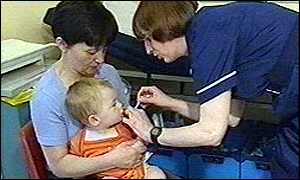 More multiple vaccines could be introduced A child's immune system cannot be "overloaded" when given a multiple vaccine, say doctors. There are plans to introduce more multiple vaccines, including one with as many as seven separate components. But scientists said that, despite some parents fears, it was a myth that the immune system would not be able to cope with the jabs. They added that combined vaccines involve fewer injections, less pain and fewer visits to the doctor than single jabs.
Currently, the only other combined jab that children receive is the DTP-Hib jab, which combines diphtheria, tetanus, whooping cough and Haemophilus influenzae B. But there are plans to introduce more, including an injection combining MMR and chicken pox. and adding polio to DTP-Hib, which would then contain seven separate injections. 'System can cope' Dr David Elliman, from the department of child health at St George's Hospital, London, told the BBC: "There have been lots of experiments with the multiple vaccines like the DTP, which has been around for a long time. "There has been no good evidence that by making it a multiple vaccine, you have any different side effects than with a single vaccine." He said the immune system would not be overloaded. "You can cope with some thousands of things coming at you at once, not over a long period of time. "When you encounter lots of the germs, they contain lots of bits to them, unlike most of our vaccines which are simple." He said separating the combined jabs already given would mean a child would have to have 27 injections instead of 11 before they went to school. If the new polio injection was added to that, he said the total would go up to 42. "If I was a child on the receiving end, I know which I would prefer." Side effects But Jackie Fletcher of the campaign group Jabs said she was concerned that children were exposed to the viruses in a different way to normal. "Under normal circumstances people are breathing in these types of things, but what we're talking about here are injections. "Vaccines are given via alternate routes to the way a child would normally deal with disease." And she said the vaccines contained other substances as well as the live viruses, such as the substance it had been cultured in. Ms Fletcher also warned there were serious side effects, such as febrile fits associated with vaccines. But Dr Elliman said these occurred no more frequently with the combined jabs than with the single vaccines. | |
See also:  19 Sep 02 | Health 02 Aug 02 | Health 30 Jul 02 | Health 15 Feb 02 | Health 07 Jan 02 | Health Internet links: The BBC is not responsible for the content of external internet sites Top Health stories now: Links to more Health stories are at the foot of the page. | ||||||||||||||||||||||||||||||||||||||||||||||||||||||||||||||||||||||||||||||||||||||||||||||||||||||||||||||||||||||||||||||||||||||||||||||||||||||||||||||||||||||||||||||||
| |
|  E-mail this story to a friend E-mail this story to a friend |
| |
| Links to more Health stories |
| | | ||
 | ||||
 | | Back to top
| ||
| ---------------------------------------------------------------------------------- To BBC Sport>> | To BBC Weather>> | To BBC World Service>> ---------------------------------------------------------------------------------- © MMIII | News Sources | Privacy |






