
|
 |
 | | | | | | ||||||||||||||||||||||||||||||||||||||||||||||||||||||||||||||||||||||||||||||||||||||||||||||||||||||||||||||||||||||||||||||||||||||||||
| | | You are in: Health | ||||||||||||||||||||||||||||||||||||||||||||||||||||||||||||||||||||||||||||||||||||||||||||||||||||||||||||||||||||||||||||||||||||||||||||
|
| | Monday, 4 November, 2002, 22:16 GMT Patients' leading role in NHS reforms 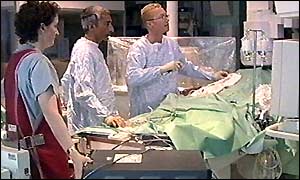 There is a shortage of surgeons in the UK Part one of Can they cure the health service? was broadcast on Monday 4 November on BBC Radio 4 at 2000 GMT. Hospitals that emphasise putting patients' needs first are being promoted in a drive to reform the NHS. Waiting times for treatment have been slashed in schemes designed by consultants in Kettering and Derby. The pioneers of the patient-led reforms are hosting conferences for doctors and nurses from all over the country. The schemes were uncovered by specialist teams drafted in by the NHS Modernisation Agency in April 2000 to investigate ways of improving frontline healthcare.
They discovered that Kettering hospital in Northamptonshire cut queues in its Accident & Emergency unit by introducing a "greet and treat" system for patients. This replaced the conventional use of a "triage nurse" who makes an initial assessment before placing patients in the queue according to the seriousness of their condition. Consultant Angela Dancocks said: "The catalyst was the number of complaints we were receiving from patients who waited for four or five hours. "Someone with a minor injury like a sprained ankle was waiting up to one hour to be seen. That's now been cut to 15 minutes. "We've introduced the system without any extra funding or staff." But Sandra Cotter, a senior casualty sister, is not convinced the system will transplant well to her workplace - the larger, inner city Stoke Mandeville hospital. "The traditional triage nurse can prioritise patients through the system," she said. "To suggest a receptionist is qualified to do this isn't sufficient." Better communication Derby Royal Infirmary transformed its patient care with a new Day Case Unit. Hundreds of minor operations now take place in two purpose-built theatres solely designed to carry out surgery in a day. Surgeon Roddy Nash said the department was completely reorganised around the needs of the patients.
"In the past, they were arriving the day before the operation. "Now we access patients weeks beforehand so they understand what they're going to have done and we've checked they have proper care at home." But Head of health policy at the Kings Fund Institute, Jennifer Dixon, warned it will take a lot more than the Modernisation Agency to transform health provision. "We can't change every hospital, every GP's surgery with these useful but limited experiments. "Unless we create an environment where this sort of scrutiny is endemic the NHS may sink back into its usual inertia." | | See also:  02 Nov 02 | Health 26 Oct 02 | Health 25 Oct 02 | Health 07 Nov 02 | Wales Internet links: The BBC is not responsible for the content of external internet sites Top Health stories now: Links to more Health stories are at the foot of the page. | ||||||||||||||||||||||||||||||||||||||||||||||||||||||||||||||||||||||||||||||||||||||||||||||||||||||||||||||||||||||||||||||||||||||||||
| |
|  E-mail this story to a friend E-mail this story to a friend |
| |
| Links to more Health stories |
| | | ||
 | ||||
 | | Back to top
| ||
| ---------------------------------------------------------------------------------- To BBC Sport>> | To BBC Weather>> | To BBC World Service>> ---------------------------------------------------------------------------------- © MMIII | News Sources | Privacy |





