
|
 |
 | | | | | | ||||||||||||||||||||||||||||||||||||||||||||||||||||||||||||||||||||||||||||||||||||||||||||||||||||||||||||||||||||||||||||||||||||||
| | | You are in: Health | ||||||||||||||||||||||||||||||||||||||||||||||||||||||||||||||||||||||||||||||||||||||||||||||||||||||||||||||||||||||||||||||||||||||||
|
| | Monday, 5 August, 2002, 11:38 GMT 12:38 UK Water birth drowning risk 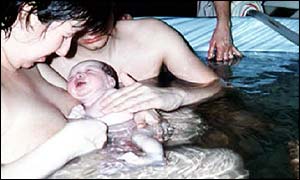 More women are opting for a water birth Babies born under water could be at risk of drowning, say researchers. Water births have become increasingly popular in recent years. Proponents say childbirth in a warm-water bathtub is more comfortable for the mother and less traumatic for the baby because it simulates the environment that the child has become accustomed to inside its mother. However, New Zealand doctors have described four incidents in which new born babies nearly drowned. They say better evidence that water births are safe is needed before the method is offered as a matter of routine. The four children, born within an 18 month period, were all transferred to the National Women's Hospital in Auckland. Breathing problems Writing in the journal Pediatrics, the researchers, led by Dr Sarah Nguyen, said all four babies were treated for "moderate to severe respiratory distress". All improved quickly with treatment, and none suffered permanent damage. Writing in the same journal, Dr Ruth Gilbert, of the Institute of Child Health in London suggested that complications were rare. However, she accepted that problems could occur if the water birth was poorly managed. She said: "Advocates of waterbirth cite the empowerment and autonomy over birth as one of the main advantages but fail to give information about the potential harms of waterbirth. "Regardless of commercial interests, practitioners have a responsibility to provide balanced information to empower women to make informed decisions about waterbirth." Supporters of the water birth technique say primitive reflexes keep babies from taking a breath until they are removed from the water. But Dr Joseph Gilhooly, a neonatalogist at Oregon Health and Science University in the US which has a water birth programme, said that babies who do not get enough oxygen during childbirth may gasp for air, risking allowing water to enter their lungs. Dr Gilhooly said immersed babies should be removed from the water quickly to avoid that risk. The number of hospitals offering water births in the US has increased to 200 from just three in 1991. However, the American College of Obstetricians and Gynecologists has not endorsed the technique. It says there is not enough data to prove safety. In the UK, the Royal College of Obstetricians and Gynaecologists has published guidelines on how to minimise the chances of complications. These include:
The research is published in the journal Pediatrics. | | See also:  22 Feb 02 | Health 25 Feb 02 | Health 09 Jun 02 | Health 18 Mar 02 | Health Internet links: The BBC is not responsible for the content of external internet sites Top Health stories now: Links to more Health stories are at the foot of the page. | ||||||||||||||||||||||||||||||||||||||||||||||||||||||||||||||||||||||||||||||||||||||||||||||||||||||||||||||||||||||||||||||||||||||
| |
|  E-mail this story to a friend E-mail this story to a friend |
| |
| Links to more Health stories |
| | | ||
 | ||||
 | | Back to top
| ||
| ---------------------------------------------------------------------------------- To BBC Sport>> | To BBC Weather>> | To BBC World Service>> ---------------------------------------------------------------------------------- © MMIII | News Sources | Privacy |



