
|
 |
 | | | | | ||||||||||||||||||||||||||||||||
| | You are in: Health | ||||||||||||||||||||||||||||||||||
 | | Friday, 22 February, 2002, 09:36 GMT Fish 'reduces premature birth risk' 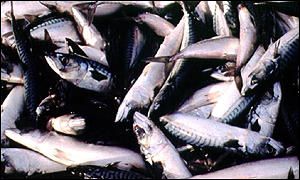 Mackerel contains healthy fish oils Eating fish in pregnancy reduces the risk of having a premature birth, scientists have found. Every year over 13 million babies are born prematurely across the world - many in developing countries. The majority die shortly after birth and the survivors are at significant risk of childhood disabilities such as cerebral palsy, blindness and deafness and intellectual impairment.
The study in the British Medical Journal says women who do not eat seafood should consider taking fish oil supplements. Researchers in Denmark surveyed more than 8,000 pregnant women about how often they had eaten fish during their pregnancy. The found that just 1.9% of women who ate fish at least once a week had a premature birth. The average birth weight and length of pregnancy both appeared to increase in direct relation to the amount of fish that women ate. Previous research has shown that oils contained in some fish known as omega-3 fatty acids can have a beneficial effect on pregnancy. Childbirth hormones Professor Lucilla Poston, head of the Maternal and Foetal Health Research Unit at St Thomas' Hospital, London, and spokesperson for the Tommy's baby charity, said the important chemical was probably a fatty acid called docosahexanoic acid (DHA). She said: "DHA can suppress the formation of chemicals called prostaglandins, which cause the uterus to contract. "We know that prostaglandins contribute to the contractions of normal labour so, in theory, more fish in the diet could increase DHA in the mother and, theoretically stop early contractions occurring." Professor Poston said many factors other than diet also contributed to premature birth. Infection For example, one of the most likely causes of premature labour is thought to be a 'silent' infection in the uterus which can lead to early contraction, ripening of the cervix and also early breaking of the waters. Fishy diets are unlikely to be able to counteract the effects of infection. WellBeing, the health research charity for women and babies, welcomed the research. Professor David Taylor, chairman of the research advisory committee, said: "Life-style factors, such as nutrition, are recognised to play a role in the causation of preterm birth. "This study provides additional evidence for this role and should be a stimulus for definitive research in populations other than Denmark." | |
See also:  Internet links: The BBC is not responsible for the content of external internet sites Top Health stories now:  Links to more Health stories are at the foot of the page. | ||||||||||||||||||||||||||||||||
|
Links to more Health stories |
 | | ^^ Back to top News Front Page | World | UK | UK Politics | Business | Sci/Tech | Health | Education | Entertainment | Talking Point | In Depth | AudioVideo ---------------------------------------------------------------------------------- To BBC Sport>> | To BBC Weather>> ---------------------------------------------------------------------------------- © MMIII|News Sources|Privacy  |


 E-mail this story to a friend