
|
 |
 | | | | | | ||||||||||||||||||||||||||||||||||||||||||||||||||||||||||||||||||||||||||||||||||||||||||||||||||||||||||||||||||||||||||||||||||||||||||
| | | You are in: Health | ||||||||||||||||||||||||||||||||||||||||||||||||||||||||||||||||||||||||||||||||||||||||||||||||||||||||||||||||||||||||||||||||||||||||||||
|
| | Wednesday, 24 July, 2002, 05:14 GMT 06:14 UK MPs attack bed-blocking policies 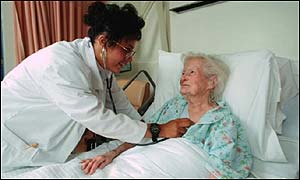 Many elderly patients are stuck in hospital unnecessarily MPs have called for a "radical overhaul" of the way the NHS tackles bed-blocking in hospitals in England. The Common's health committee has criticised "very wide" variations in the number of people stuck in hospital beds. Figures from the Department of Health suggest that at the end of April, 6% of all acute beds in English hospitals were taken up by people who could have been discharged.
In a report, published on Wednesday, it urged the NHS, social services and local councils to work more closely together to tackle the problem. Many patients stuck unnecessarily in hospital are elderly, who are well enough to be discharged but are waiting for alternative care. 'Patients at risk' MPs warned that keeping patients in hospital unnecessarily could be putting them at risk. In their report, they said: "We are firmly convinced that hospitals are often inappropriate, potentially harmful, as well as exceedingly expensive places to act simply as staging posts for people awaiting care home places." They called on the Department of Health to publish guidelines to help hospitals reduce their number of inappropriate admissions. The influential committee suggested that hospitals could also take firmer action by allowing nurses to discharge patients and employing patient discharge liaison managers to oversee the whole process. They said: "Arrangements for the management of discharge need radical overhaul in many hospitals. "In our view, best practice involves a multi-agency team actively managing all aspects of the discharge process." The committee criticised ministers for failing to develop new ways of tackling the problem. They suggested that using technology like telemedicine, which allows doctors and patients to retain contact through television, would allow many patients to be discharged. Warning on fines The committee warned the government against pressing ahead too quickly with plans to fine local councils that fail to provide alternative accommodation for patients who are stuck unnecessarily in hospital.
Committee chairman David Hinchliffe said more work was needed to allow people to return home. He said: "We need to get away from the idea that a hospital is the only place where a sick or recuperating person can be treated or stay." The Department of Health said action will be taken to tackle the issue. A spokeswoman said: "We intend to legislate to introduce incentives for social services to provide services in a timely way, which avoids delays when the patient is ready to leave hospital." The Conservatives said they hoped the report would force to government to act. Simon Burns, its shadow health minister and a member of the health committee, said: "I hope that this report will focus the mind of the government, bring them out of their denial of the problems and act to do something to protect some of the most vulnerable people in our society." Paul Burstow of the Liberal Democrats added: "Milburn must rethink his plan to impose penalties on Councils for delayed discharge. Rather than delivering better care it will reinforce the culture of buck-passing and mutual blame." Dr Andrew Dearden of the British Medical Association said: "People need to be discharged in a timely and organised way so they get the right care in the right place at the right time. "There should be a plan in place for each patient so that as well as a treatment plan there is a discharge plan." On Tuesday, the government announced that elderly people are to be given hundreds of pounds each to enable them to leave hospital and to buy home help services. | | See also:  23 Jul 02 | Health 19 Jul 02 | Health 19 Jun 02 | Health 18 Apr 02 | Health Internet links: The BBC is not responsible for the content of external internet sites Top Health stories now: Links to more Health stories are at the foot of the page. | ||||||||||||||||||||||||||||||||||||||||||||||||||||||||||||||||||||||||||||||||||||||||||||||||||||||||||||||||||||||||||||||||||||||||||
| |
|  E-mail this story to a friend E-mail this story to a friend |
| |
| Links to more Health stories |
| | | ||
 | ||||
 | | Back to top
| ||
| ---------------------------------------------------------------------------------- To BBC Sport>> | To BBC Weather>> | To BBC World Service>> ---------------------------------------------------------------------------------- © MMIII | News Sources | Privacy |





