
|
 |
 | | | | | | ||||||||||||||||||||||||||||||||||||||||||||||||||||||||||||||||||||||||||||||||||||||||||||||||||||||||||||||||||||||||||||||||||||||||
| | | You are in: Health | ||||||||||||||||||||||||||||||||||||||||||||||||||||||||||||||||||||||||||||||||||||||||||||||||||||||||||||||||||||||||||||||||||||||||||
|
| | Thursday, 18 July, 2002, 01:07 GMT 02:07 UK Fears over malaria vaccine 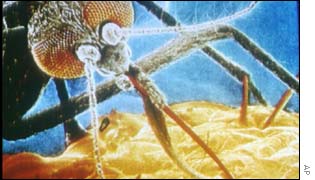 Malaria is spread by mosquitos Scientists have suggested that it may be impossible to develop an effective vaccine to fight malaria. It follows genetic tests on the parasite responsible for the disease by researchers in the US. They found that the parasite, called plasmodium falciparum, is genetically very complex.
The scientists believe that this complexity may explain why the parasite has been able to evolve and become resistant to many drugs designed to fight malaria. Warning They also warned that the parasites' ability to evolve means it will be more difficult to develop an effective vaccine than was previously thought. An estimated two million people die with malaria every year, mostly infants and children. Attempts to fight the disease with drugs have had only limited success. Doctors at the US National Institutes of Health carried out tests on five plasmodium falciparum parasites, each from a different part of the globe. They analysed the genetic make-up or genome of each of the parasites. Their tests revealed that each of the genomes was very different. This led scientists to conclude that their earliest common parasite ancestor must have lived between 100,000 and 180,000 years ago. In further tests, they examined the spread of a plasmodium falciparum parasite which is resistant to chloroquine, one of the drugs used to fight malaria. Spreads rapidly They found that resistance to this drug could be traced back to the 1950s and to specific events in south-east Asia, South America and Papua New Guinea. But they also discovered that the emergence of drug resistant malaria in Africa in the 1970s was linked to the original outbreak in south-east Asia, 20 years previously. The scientists said their tests showed that the parasite could evolve and become drug resistant relatively rapidly. They added that their results also showed that drug resistance could spread across continents without much difficult. Dr Xin-zhuan Su, one of the researchers, said the studies, which are published in the journal Nature, would change scientific thinking on the parasite and the development of a malaria vaccine. "This study changes our thinking about chloroquine resistance. First, it has happened more frequently than we thought. "Second, we know that the African parasite that developed resistance in the late 1970s did not arise independently but came from south-east Asia. "It took only 10 to 15 years for these resistant parasites to spread throughout Africa." Dr Su added: "This means that when a drug or vaccine-resistant parasite arises, it will not take long for this resistance to spread to other continents." Professor David Warhurst of the UK's Public Health Laboratory Service's malaria reference laboratory said the findings were worrying. "It confirms worries we have had for some time that this is a very variable organism. It gives a scientific basis to these worries, which is always a cause for concern," he told BBC News Online. | | See also:  26 Jul 99 | Medical notes 22 May 02 | Health 05 May 02 | Health 15 Feb 02 | Health 08 Dec 01 | Health Internet links: The BBC is not responsible for the content of external internet sites Top Health stories now: Links to more Health stories are at the foot of the page. | ||||||||||||||||||||||||||||||||||||||||||||||||||||||||||||||||||||||||||||||||||||||||||||||||||||||||||||||||||||||||||||||||||||||||
| |
|  E-mail this story to a friend E-mail this story to a friend |
| |
| Links to more Health stories |
| | | ||
 | ||||
 | | Back to top
| ||
| ---------------------------------------------------------------------------------- To BBC Sport>> | To BBC Weather>> | To BBC World Service>> ---------------------------------------------------------------------------------- © MMIII | News Sources | Privacy |





