|
 |
 | | | | | | ||||||||||||||||||||||||||||||||||||||||||||||||||||||||||||||||||||||||||||||||||||||||||||||||||||||||||||||||||||||||||||||||||||||||||||||||||||||||||||||||||||||||||||||||||||||||||||||||||||||||||||||||||||||||||||
| | | You are in: Europe | ||||||||||||||||||||||||||||||||||||||||||||||||||||||||||||||||||||||||||||||||||||||||||||||||||||||||||||||||||||||||||||||||||||||||||||||||||||||||||||||||||||||||||||||||||||||||||||||||||||||||||||||||||||||||||||||
|
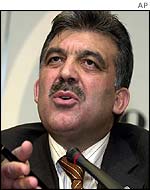
| | Thursday, 19 December, 2002, 19:12 GMT Turkish leader's PM hopes dashed  Mr Erdogan has been holding power behind the scenes The President of Turkey, Ahmet Necdet Sezer, has vetoed changes to the constitution which would allow the leader of the ruling party to become prime minister. The Turkish parliament last week voted in favour of a series of constitutional amendments which would allow Recep Tayyip Erdogan to be elected to parliament and therefore become prime minister.
But Mr Erdogan was banned from taking part in the poll because of a past conviction for inciting religious hatred. Instead, party deputy Abdullah Gul has taken the prime minister's post. Mr Sezer objected to the changes, saying they were designed for Mr Erdogan and were based on "subjective, concrete and personal aims". President Sezer indicated soon after the AK Party's overwhelming election victory in early November that he would take a dim view of changes to the constitution that were aimed at a single individual, says the BBC's Istanbul correspondent Jonny Dymond. Parliament voted overwhelmingly last week to change a clause in the constitution that barred people who have been convicted of engaging in illegal "ideological and anarchic activities" from running for political office. The new clause bans those convicted of terrorism. Second run Parliament must now decide whether to vote on the laws again. If they pass again unchanged, the president has the power to force a referendum on the issue, which would almost certainly come too late for Mr Erdogan to get elected. The amendments, passed as part of efforts to meet EU membership criteria, would allow the immensely popular Mr Erdogan to stand in by-elections early next year. By-elections results in the south-eastern province of Siirt were cancelled earlier this month after evidence of irregularities were found. | |
See also:  13 Dec 02 | Europe 16 Nov 02 | Europe 11 Dec 02 | Europe Top Europe stories now: Links to more Europe stories are at the foot of the page. | ||||||||||||||||||||||||||||||||||||||||||||||||||||||||||||||||||||||||||||||||||||||||||||||||||||||||||||||||||||||||||||||||||||||||||||||||||||||||||||||||||||||||||||||||||||||||||||||||||||||||||||||||||||||||||||
 | |
|  E-mail this story to a friend E-mail this story to a friend |
| |
| Links to more Europe stories |
| | | ||
 | ||||
 | | Back to top
| ||
| ---------------------------------------------------------------------------------- To BBC Sport>> | To BBC Weather>> | To BBC World Service>> ---------------------------------------------------------------------------------- © MMIII | News Sources | Privacy |