|
 |
 | | | | | | ||||||||||||||||||||||||||||||||||||||||||||||||||||||||||||||||||||||||||||||||||||||||||||||||||||||||||||||||||||||||||||||||||||||||||||||||||||||||||||||||||||||||||||||||||||||||||||||||||||||||||||||||||||||||
| | | You are in: Europe | ||||||||||||||||||||||||||||||||||||||||||||||||||||||||||||||||||||||||||||||||||||||||||||||||||||||||||||||||||||||||||||||||||||||||||||||||||||||||||||||||||||||||||||||||||||||||||||||||||||||||||||||||||||||||||
|
| | Saturday, 16 November, 2002, 12:06 GMT Islamic moderate named Turkey PM 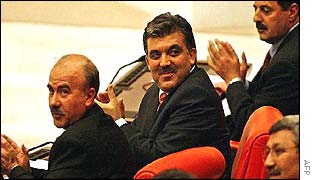 Abdullah Gul (centre) is liked by the markets Abdullah Gul, deputy leader of the Islamist-based Justice and Development Party (AK) has been appointed prime minister by President Ahmet Necdet Sezer. Traditionally the leader of the largest party on parliament is appointed, but AK leader Recep Tayyip Erdogan is barred from office because of a 1998 conviction for inciting religious hatred.
Mr Gul, a pro-Western economist, is now expected to form Turkey's first single-party government in 15 years. The AK Party won a landslide victory on 3 November, securing 363 of 550 seats in parliament. The party has tried to distance itself from its Islamic roots and has sought to reassure the West and the European Union, of which it wants to become a member state. Constitution change "The president has shown kindness and placed his trust in me and given me the task of forming the 58th government of Turkey," Mr Gul said.
The new prime minister said he would draw up a cabinet list without delay, adding it could be submitted to the president by Monday. On Friday, Mr Gul told the Turkish Daily News: "Our aim is to show the world that a country which has a Muslim population can also be democratic, transparent and modern, and co-operate with the world." Correspondents say his designation is likely to be welcomed by Nato allies and the financial markets. However, analysts say his appointment may only be temporary - AK lawmakers are expected to push for a change in the constitution to allow Mr Erdogan to head the government. 'Urgent solutions' In recent days, Mr Erdogan has been outlining his party's government programme.
Speaking on Saturday, he announced a series of changes in laws to meet EU standards. The changes, he said, would be passed within a month and expand freedom of rights, religion and expression and promote a more transparent government. He also said that privatisation would be speeded up. "With the power of governing alone, our government will provide urgent solutions to problems that have been piling up for years," he said. "We've said 'from now on, nothing will be the same in Turkey' - now we're at the beginning of those days." | |
See also:  13 Nov 02 | Europe 21 Oct 02 | Europe 08 Nov 02 | Europe 07 Nov 02 | Europe 04 Nov 02 | Business 04 Nov 02 | Europe 01 Nov 02 | Europe Internet links: The BBC is not responsible for the content of external internet sites Top Europe stories now: Links to more Europe stories are at the foot of the page. | ||||||||||||||||||||||||||||||||||||||||||||||||||||||||||||||||||||||||||||||||||||||||||||||||||||||||||||||||||||||||||||||||||||||||||||||||||||||||||||||||||||||||||||||||||||||||||||||||||||||||||||||||||||||||
| |
|  E-mail this story to a friend E-mail this story to a friend |
| |
| Links to more Europe stories |
| | | ||
 | ||||
 | | Back to top
| ||
| ---------------------------------------------------------------------------------- To BBC Sport>> | To BBC Weather>> | To BBC World Service>> ---------------------------------------------------------------------------------- © MMIII | News Sources | Privacy |