|
 |
 | | | | | | ||||||||||||||||||||||||||||||||||||||||||||||||||||||||||||||||||||||||||||||||||||||||||||||||||||||||||||||||||||||||||||||||||||||||||||||||||||||||||||||||||||||||||||
| | | You are in: Europe | ||||||||||||||||||||||||||||||||||||||||||||||||||||||||||||||||||||||||||||||||||||||||||||||||||||||||||||||||||||||||||||||||||||||||||||||||||||||||||||||||||||||||||||||
|
| | Thursday, 31 October, 2002, 18:33 GMT Italy at the mercy of fault lines 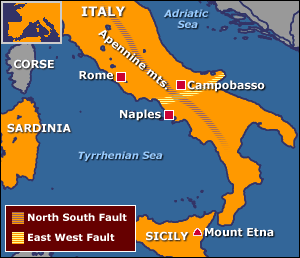 Italy has a long history of earthquakes - experts say they have influenced everything from the distribution of the population and adaptation of architecture to the dialect spoken in different areas of the country. Since the major earthquake of 1627, which devastated the central region of Gargano, Italy has acquired a reputation as being one of the most earthquake-prone countries in the world. What makes it so, say experts, is the overall movement of tectonic plates in Europe and Africa and the collision course they have been on, in addition to the existence of well-defined fault-lines and geological movements criss-crossing the area. They also point out that, with the exception of a line running across the border into Slovenia in the north, Italy's seismic activity is generally confined to the Italian peninsula and its islands. Fault lines Thursday's earthquake had its epicentre near the central town of Casacalenda in the province of Campobasso. It finds itself on the route of an East-West fault, which is a result of tectonic movements underneath the Adriatic.
As a result of the movement of the European tectonic plate in a south-easterly direction, the Earth's crust has broken into smaller pieces, and the Adriatic Sea is sitting in one of those rocks. "In the course of their movement, some of those rocks are bending and this creates faults with an east-westerly direction that caused Thursday's earthquake," Dr Musson told the BBC. But the largest Italian earthquakes tend to align along the crest of the central and southern Apennines, according to professor Gianluca Valensise of the Italian Institute of Geophysics and Vulcanology. There is an alignment - running from Genoa in the north to Messina in the south - that has been responsible for major earthquakes, Professor Valensise told BBC News Online, and all major tremors will sooner or later concentrate along that line. "However, while seismicity concentrates there, potentially active lineaments occur elsewhere." Hard to predict "But we learn of earthquakes after they have happened. Italian faults are not easy to identify, they are hidden and many are difficult to see." Seismic activity in Sicily, Professor Valensise said, was particularly hard to predict - it could not be explained by observing the Apenninic belt. The Italian Government has declared a state of emergency in parts of the island, after a series of earthquakes accompanying the eruption of Mount Etna forced about 1,000 people flee their homes. But Professor Valensise said the Campobasso earthquake was unlikely to have been caused by the Etna eruptions - "the two are too far away" - even though a volcano is caused by the same types of fractures in the Earth's crust as those bringing about earthquakes. | |
See also:  31 Oct 02 | Europe 30 Oct 02 | Europe 27 Jul 01 | Science/Nature 29 Aug 01 | Europe Internet links: The BBC is not responsible for the content of external internet sites Top Europe stories now: Links to more Europe stories are at the foot of the page. | ||||||||||||||||||||||||||||||||||||||||||||||||||||||||||||||||||||||||||||||||||||||||||||||||||||||||||||||||||||||||||||||||||||||||||||||||||||||||||||||||||||||||||||
| |
|  E-mail this story to a friend E-mail this story to a friend |
| |
| Links to more Europe stories |
| | | ||
 | ||||
 | | Back to top
| ||
| ---------------------------------------------------------------------------------- To BBC Sport>> | To BBC Weather>> | To BBC World Service>> ---------------------------------------------------------------------------------- © MMIII | News Sources | Privacy |