|
 |
 | | | | | | ||||||||||||||||||||||||||||||||||||||||||||||||||||||||||||||||||||||||||||||||||||||||||||||||||||||||||||||||||||||||||||||||||||||||||||||||||||||||||||||||||||||||
| | | You are in: Europe | ||||||||||||||||||||||||||||||||||||||||||||||||||||||||||||||||||||||||||||||||||||||||||||||||||||||||||||||||||||||||||||||||||||||||||||||||||||||||||||||||||||||||||
|
| | Monday, 19 August, 2002, 22:22 GMT 23:22 UK Pope strikes deep chord with Poles 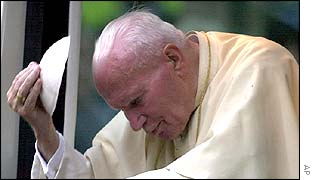 The Pope is more than a religious leader in Poland
Even before his elevation to the Holy See in 1978, he made a name for himself as a critic of the Communist regime, repeatedly calling for a greater emphasis on human rights and the dignity of the individual.
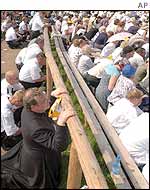
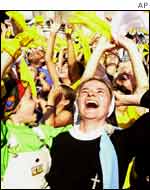
John Paul's visit in 1979 brought millions onto the streets of Poland. It was not so much what the Pope said, but rather that individual Poles found they were not alone in being Catholic, proud to be Polish, and fervently opposed to the country's Communist government. "We felt something unusual had happened," explains Alfred Wierzbicki of Lublin's Catholic University. "We felt suddenly more united. We knew we could change the government and find freedom." Just like the first visit, this pilgrimage - possibly the last John Paul will make to his homeland - has had a political edge to it. Radical answers During his first address, on the tarmac of Krakow's airport, he talked about the people who were struggling in what he called the weight of social and economic changes that Poland was going through.
Poland today is undergoing a painful readjustment. Cities like Warsaw and Gdansk are plastered with the brands and logos of capitalism, and the shops are full. But nearly one in five workers has no job. Some, especially in the more traditional countryside, have turned to radical answers to Poland's problems. Among those challenging the modern drive towards European integration are organisations that draw strongly, sometimes explicitly, from a fundamentalist Catholicism, such as the League of Polish Families and Radio Maryja. Such Euro-scepticism sits uneasily with the Pope's final address in Poland, when he expressed the hope the country would find its due place in the European Union. The conflict between John Paul II and some of the Church's strongest supporters on such key political issues is a striking one. Social conservative The Pope also made political comments on familiar, socially conservative ground. In front of more than two million people at the open air Mass that formed the centrepiece of the visit, he spoke about new dangers opening up for mankind as technology progressed. In an attack on genetic manipulation, he said man now lives as if God did not exist, and claimed the Creator's right to interfere in the mystery of human life. Such pronouncements were roundly cheered by the crowd. But such is the love and affection that Polish people have for the Pope, some critics say this is irrelevant. "This is all about emotions," argues Adam Szostkiewicz, a prominent journalist with Polityka magazine. "We love him, but we Poles don't necessarily listen to him when he tells us what we don't want to hear." As many as 90% of Poles say they are Catholic. But figures from Poland's Catholic information agency say that only 10% regularly attend Mass and carefully follow the Church's teachings. With modern Poland facing more complex problems than a universally hated Communist government, the Catholic Church has a challenge finding a relevant moral message for the Polish people - especially when it loses its charismatic Polish head. Poland's politicians face a similar challenge. When President Aleksander Kwasniewski and Prime Minister Leszek Miller had audiences with Pope John Paul during his visit, it's unlikely they confined the conversation to religious topics. | | See also:  19 Aug 02 | Europe 18 Aug 02 | Europe 18 Aug 02 | Europe 17 Aug 02 | Media reports 17 Aug 02 | Europe 16 Aug 02 | Europe 01 Jan 01 | Science/Nature 29 Aug 00 | Europe Internet links: The BBC is not responsible for the content of external internet sites Top Europe stories now: Links to more Europe stories are at the foot of the page. | ||||||||||||||||||||||||||||||||||||||||||||||||||||||||||||||||||||||||||||||||||||||||||||||||||||||||||||||||||||||||||||||||||||||||||||||||||||||||||||||||||||||||
| |
|  E-mail this story to a friend E-mail this story to a friend |
| |
| Links to more Europe stories |
| | | ||
 | ||||
 | | Back to top
| ||
| ---------------------------------------------------------------------------------- To BBC Sport>> | To BBC Weather>> | To BBC World Service>> ---------------------------------------------------------------------------------- © MMIII | News Sources | Privacy |