|
 |
 | | | | | | ||||||||||||||||||||||||||||||||||||||||||||||||||||||||||||||||||||||||||||||||||||||||||||||||||||||||||||||||||||||||||||||||||||||||||||||||||||||||||||||||||||||||||||||||||||||||||||||||||||||||||
| | | You are in: Europe | ||||||||||||||||||||||||||||||||||||||||||||||||||||||||||||||||||||||||||||||||||||||||||||||||||||||||||||||||||||||||||||||||||||||||||||||||||||||||||||||||||||||||||||||||||||||||||||||||||||||||||||
|
| | Sunday, 18 August, 2002, 18:19 GMT 19:19 UK Eyewitness: Pope brings out crowds 
The people of Krakow woke up early on Sunday morning for their appointment with the Pope. By the time the sun came up, many were already on the move, heading in one direction.
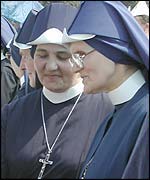
Many also had sunhats and binoculars, while others were wisely carrying folding chairs and umbrellas. It was going to be a long day, and with many of the roads closed by the police, the only way to get to the open-air Mass was on foot. Their destination was the ancient common of land at Blonia. It is the biggest open space in the city, but by breakfast time there was little space left. Huge turnout Exactly how many people were present is difficult to determine with any accuracy. I can only say that standing at the front, close to the papal stage, the crowds seemed to stretch away to the horizon. Only by looking at the giant television screen, which displayed panoramic views from above the common, was it possible to appreciate the scale of the event.
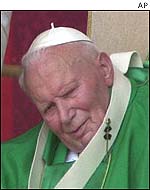
Back on home soil, John Paul II showed that age and infirmity has not diminished his hold over his people. Almost every bus and train coming into the city during the past few days has been packed with people determined not to miss the highlight of this papal tour. Many had nowhere to stay in the city, and arrived with tents and sleeping bags, ready to camp out on the streets or in the parks. On Saturday night, in Krakow's main square, I saw groups of young people gathered in small groups, singing religious songs by the light of candles. Decline In the minds of many Poles is the thought that this could be the Pope's last visit to his homeland, but nobody likes to talk about his health. By the end of the Mass at Blonia, the Pope was looking and sounding very tired. But the huge crowd was clearly reluctant to let him go. "Stay with us, stay with us," they chanted. The Pope relishes this kind of banter with his people, and was able to tease the crowd over the speculation that he might be contemplating retirement. "So you want me to desert Rome?" he replied innocently. The possibility of the Pope remaining in Poland has been firmly denied by Vatican officials, who insist he will be flying back to Rome tomorrow evening. Before saying his goodbyes, he told his audience he would like to be able to say "until the next time", but said it was in God's hands. Personal moment So it seems he has not ruled out making another visit in the future. For the remainder of his day, however, he has been thinking of his past life in Krakow.
It was in the crypt of the 14th Century cathedral that he said his first mass, after being ordained in 1946. His day ended with the most personal moment of this visit. He paid a private visit to a city cemetery to pray at grave of his parents. His mother died when he was just nine, and his father only lived until 1941, so they never saw him become a priest, let alone Pope. From a humble background, Karol Wojtyla became his country's best-known son, and Poland will be sorry to see him go. | |
See also:  18 Aug 02 | Europe 18 Aug 02 | Europe 17 Aug 02 | Media reports 17 Aug 02 | Europe 16 Aug 02 | Europe 29 Nov 01 | Science/Nature 01 Jan 01 | Science/Nature 29 Aug 00 | Europe Internet links: The BBC is not responsible for the content of external internet sites Top Europe stories now: Links to more Europe stories are at the foot of the page. | ||||||||||||||||||||||||||||||||||||||||||||||||||||||||||||||||||||||||||||||||||||||||||||||||||||||||||||||||||||||||||||||||||||||||||||||||||||||||||||||||||||||||||||||||||||||||||||||||||||||||||
| |
|  E-mail this story to a friend E-mail this story to a friend |
| |
| Links to more Europe stories |
| | | ||
 | ||||
 | | Back to top
| ||
| ---------------------------------------------------------------------------------- To BBC Sport>> | To BBC Weather>> | To BBC World Service>> ---------------------------------------------------------------------------------- © MMIII | News Sources | Privacy |