|
 |
 | | | | | | |||||||||||||||||||||||||||||||||||||||||||||||||||||||||||||||||||||||||||||||||||||||||||||||||||||||||||||||||||||||||||||||||||||||||||||||||||||||||||||||
| | | You are in: Europe | |||||||||||||||||||||||||||||||||||||||||||||||||||||||||||||||||||||||||||||||||||||||||||||||||||||||||||||||||||||||||||||||||||||||||||||||||||||||||||||||||
|
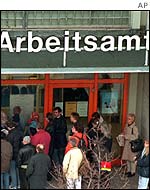
| | Thursday, 20 June, 2002, 16:04 GMT 17:04 UK German battle lines drawn on immigration Some 1.5 million professional posts lie vacant A landmark German immigration law enabling employers to seek labour abroad is poised to become a vicious battleground in the country's upcoming elections. President Johannes Rau signed the bill into law after a three-month wrangle between the ruling Social Democrats, who proposed the legislation, and the conservative Christian Democrat Union (CDU), its bitter opponents. CDU deputies walked out of parliament when the bill was passed in March, declaring that it had been forced through the house in a wholly unconstitutional manner.
If this fails, the conservatives' candidate for chancellor, Edmund Stoiber, has vowed to abolish the law if he comes to power after September's general elections. Economic needs The law will allow a limited number of skilled workers into Germany to fill professional jobs that currently lie vacant - a move welcomed by many business leaders.
Now, while the German unemployment rate doggedly hovers at the four million mark, there are an estimated 1.5 million professional positions that cannot be filled owing to a skills shortage. If employers are not able to look abroad to fill these places, the government argues, there will be serious consequences for the economy in the longer term. Conservative caution The bill makes no provision for unskilled workers, and will tighten asylum procedures. It will also oblige those foreigners who are in Germany to integrate. Chancellor Gerhard Schroeder has been keen to stress that he is no liberal when it comes to immigration. "Anyone who tries to block this bill is doing nothing to limit immigration," he said after the CDU and its partner, Mr Stoiber's Christian Social Union, announced it would contest the law. The alliance argues that the bill will increase unemployment. And having opted to make both jobs and foreigners central planks of its electoral campaign, it has no intention of letting the legislation pass without a fight. But correspondents say it needs to proceed with care. The president of the German Industry Association, Michael Rogowski, told the CDU at a key party congress earlier this week that they needed to take a more "reasonable" line on immigration. The country, he said, needed skilled workers and needed them soon if it were to compete effectively on the international stage. And surveys show that while more than half of Germans feel there are too many immigrants in the country, a similar number - including Christian Democrat supporters - are in favour of opening the doors to skilled immigrants. | | See also:  22 Mar 02 | Europe 22 Mar 02 | Europe 23 Mar 02 | Media reports 30 Oct 01 | South Asia 04 Jul 01 | Europe 30 Oct 01 | Europe 04 Jul 01 | Europe 14 Jan 99 | Europe Internet links: The BBC is not responsible for the content of external internet sites Top Europe stories now: Links to more Europe stories are at the foot of the page. | |||||||||||||||||||||||||||||||||||||||||||||||||||||||||||||||||||||||||||||||||||||||||||||||||||||||||||||||||||||||||||||||||||||||||||||||||||||||||||||||
| |
|  E-mail this story to a friend E-mail this story to a friend |
| |
| Links to more Europe stories |
| | | ||
 | ||||
 | | Back to top
| ||
| ---------------------------------------------------------------------------------- To BBC Sport>> | To BBC Weather>> | To BBC World Service>> ---------------------------------------------------------------------------------- © MMIII | News Sources | Privacy |