|
 |
 | | | | | | |||||||||||||||||||||||||||||||||||||||||||||||||||||||||||||||||||||||||||||||||||||||||||||||||||||||||||||||||||||||||||||||||||||||||||||||||||||||||||||||||||||||||||||||||||||
| | | You are in: Europe | |||||||||||||||||||||||||||||||||||||||||||||||||||||||||||||||||||||||||||||||||||||||||||||||||||||||||||||||||||||||||||||||||||||||||||||||||||||||||||||||||||||||||||||||||||||||
|
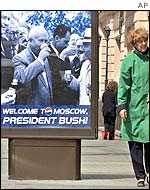
| | Thursday, 23 May, 2002, 15:44 GMT 16:44 UK Russians question whether West is best Bush and Putin: Shoulder to shoulder on market stalls
But how is all this being seen in Moscow? And is Mr Putin taking a big gamble pushing his country closer to the West? The Russian newspapers are calling Mr Putin the biggest Westerniser Russia has seen since Tsar Peter the Great. He created the city of St Petersburg as a European-style capital in the middle of the Russian marshes. Reliable ally The comparison is not meant entirely as a compliment to Mr Putin. While Russians are still delighted that their president cuts an impressive and sober figure on the world stage, they are less happy with what many see as his pro-Western policies. For the moment, thanks to Russia's long tradition of putting its leaders on a pedestal, Mr Putin can do what he likes. And slowly, he is improving Russian standards of living, alongside trying to convince the West that the new Russia can be a reliable political and military ally.
The Moscow elite and the military have been muttering about whether it is wise for Mr Putin to get so close to the US. A recent poll showed that three-quarters of Russians still distrust America or even regard it as an enemy. Mr Putin's pro-Western leanings are not shared by many at the Kremlin either. Many fear they have little to gain and much to lose if Russia adopts Western-style transparency in government or business. Legacy of suspicion The current opaqueness of power structures in both bureaucracy and commerce here suits some - allowing bribery, corruption and nepotism to flourish, though less so than when Mr Putin came to power. Russia's newspaper commentators have also been less than supportive over the nuclear arms reduction treaty that Mr Putin will sign with Mr Bush. The tabloid Komsomolskaya Pravda warns that Washington will stockpile rather than destroy its weapons. That legacy of suspicion left by the Cold War could spell trouble for Mr Putin. This week, Russian army chiefs have been summoned for a special three-day meeting in Moscow. Some commentators believe it is aimed at trying to keep the army onside. The Kremlin is apparently worried by the army's dissatisfaction with Mr Putin's policies, such as allowing US troops to be based on former Soviet soil in Central Asia.
However, the old Soviet top brass do warn that they are deeply uneasy about letting the West get so close to Russia. General Nikolai Chervov, a former military adviser on arms control to Mikhail Gorbachev, says Mr Putin is taking too much on trust with the West. "Nato is expanding to the east, while a front of instability is appearing in the south with the US military bases in central Asia," he says. "That means Russia will be surrounded - and then you don't even need nuclear weapons: conventional weapons would be enough to take Russia apart.
Even Moscow's modernisers and liberals agree that it will not be easy for Mr Putin to change Russian attitudes overnight. Andrei Kozyrev was foreign minister for five years under Boris Yeltsin, and says that the US will have to tread carefully at this summit, to allow Russia to save face. He believes there is still a sense of defensiveness among Russians, almost an inferiority complex with regards to the West, that Mr Bush must be careful not to aggravate.
The mutterings among the elite have so far had few consequences. Public discontent is unlikely to topple Mr Putin - there are no obvious alternatives to the president. And most Russians like visiting the West, or buying Western goods - and most want their country to become more free and prosperous. But Mr Putin is more likely to become unpopular if living standards at home fail to improve than for allowing the US to have its bases in Central Asia. Another priority is tackling the demoralisation among the armed forces. For the time being, the president enjoys 70% approval ratings - meaning that now is the time to tackle Russia's problems at home while improving its standing abroad. The worst that could happen to Vladimir Putin is failure - letting Russia sink back into quiet decay and isolation, an outcome the president is determined to avoid. | |
See also:  22 May 02 | Europe 22 May 02 | Americas 22 May 02 | Europe 22 May 02 | Media reports 20 May 02 | Europe 12 Feb 02 | Europe 09 Feb 02 | Europe 08 Feb 02 | Europe 08 Feb 02 | Europe 02 Feb 02 | Americas Internet links: The BBC is not responsible for the content of external internet sites Top Europe stories now: Links to more Europe stories are at the foot of the page. | |||||||||||||||||||||||||||||||||||||||||||||||||||||||||||||||||||||||||||||||||||||||||||||||||||||||||||||||||||||||||||||||||||||||||||||||||||||||||||||||||||||||||||||||||||||
| |
|  E-mail this story to a friend E-mail this story to a friend |
| |
| Links to more Europe stories |
| | | ||
 | ||||
 | | Back to top
| ||
| ---------------------------------------------------------------------------------- To BBC Sport>> | To BBC Weather>> | To BBC World Service>> ---------------------------------------------------------------------------------- © MMIII | News Sources | Privacy |