|
 |
 | | | | | | |||||||||||||||||||||||||||||||||||||||||||||||||||||||||||||||||||||||||||||||||||||||||||||||||||||||||||||||||||||||||||||||||||||||||||||||||||||||||||||||||||||||
| | | You are in: Entertainment | |||||||||||||||||||||||||||||||||||||||||||||||||||||||||||||||||||||||||||||||||||||||||||||||||||||||||||||||||||||||||||||||||||||||||||||||||||||||||||||||||||||||||
|
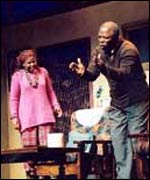
| | Sunday, 10 November, 2002, 21:14 GMT South Africa's 'theatrical renaissance' 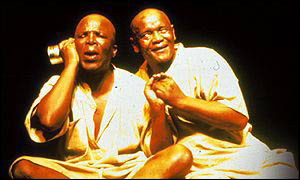 Apartheid gave theatre a passion and urgency Actor turned playwright John Kani discusses his part in the changing role of theatre in South Africa and tells BBC World Service how his art has changed since apartheid. According to South African theatre critics, the end of apartheid marked a creative downturn in the country. Actor-turned-writer Jon Kani, whose authorial debut As Nothing But The Truth is drawing large audiences in Johannesburg, believes that only now is South African theatre experiencing a renaissance. "Yes there is excitement," he told the Artbeat programme, "but that renaissance is not only an import product or export product, it has to be a situation emanating from the excitement at home." Political Perhaps best-known outside of South Africa for his collaboration with fellow playwright Athol Fugard, when they produced The Island, John Kani has been dubbed "the grand old patriarch" of South African theatre. Depicting the resilience and psychological torment of two political prisoners on Robben Island the play gave theatre a forceful political voice.
Now Kani has turned his hand to writing as well as acting with his play - a tribute to his brother, a poet who was murdered during the apartheid era. Kani explained how Nothing But The Truth does not hark back to the past but allows the audience to come to terms with post-apartheid South Africa. "A white lady came to see the play and she was sitting in the theatre sobbing," he explained. After comforting her she told him, "I have always felt guilty because I am white and I felt guiltier in the new democratic dispensation because I don't know where I actually fit. "How can I enjoy this democracy when I have done nothing to contribute towards it? Tonight your play made me feel so South African and I am clear now what I can do." Subtle Celebrating the unsung heroes of apartheid, Nothing But The Truth, is currently selling out at the Market Theatre in Johannesburg.
It explores the tensions and jealousies between two brothers, one of whom played a high profile part in the anti-apartheid struggle and died in exile. Although considered "low key political theatre", Kani's play led Nelson Mandela to proclaim that it "is a powerful drama, very political but in a subtle way". Inspiration For decades racial separation overshadowed South Africa. Whilst apartheid was despised by many, critics have argued that it spawned closely observed social commentaries by writers who are now bereft of a political agenda. "The 1990s were a time of euphoria," exclaimed Mannie Manim of Johannesburg's Market Theatre. "Eight years after the Mandela election, the wheels are turning again, new writers are realising what to attack and what to celebrate." Kani now feels inspired to continue writing. Already now there is another story brewing," he enthused. "I am feeling it in my belly. If I was a woman I would say that my womb is moving; the baby is beginning to kick. There is another story to be told." | |
See also:  06 Aug 01 | Africa 25 Jan 02 | Entertainment 04 Apr 02 | Entertainment Internet links: The BBC is not responsible for the content of external internet sites Top Entertainment stories now: Links to more Entertainment stories are at the foot of the page. | |||||||||||||||||||||||||||||||||||||||||||||||||||||||||||||||||||||||||||||||||||||||||||||||||||||||||||||||||||||||||||||||||||||||||||||||||||||||||||||||||||||||
| |
|  E-mail this story to a friend E-mail this story to a friend |
| |
| Links to more Entertainment stories |
| | | ||
 | ||||
 | | Back to top
| ||
| ---------------------------------------------------------------------------------- To BBC Sport>> | To BBC Weather>> | To BBC World Service>> ---------------------------------------------------------------------------------- © MMIII | News Sources | Privacy |