
|
 |
 | | | | | ||||||||||||||||||||||||||||||||||||||
| | You are in: Entertainment: Arts | ||||||||||||||||||||||||||||||||||||||||
 | | Thursday, 4 April, 2002, 14:57 GMT 15:57 UK Playwright tells of post-apartheid drama 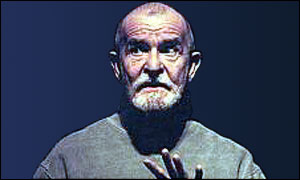 Athol Fugard has worked internationally as author, director and actor Playwright Athol Fugard, a veteran of the anti-apartheid movement, has said he has had to adapt his art for the "new" South Africa.
Recognising that he was a "storyteller, not a politician," he told BBC World Service's Art in Action programme how he realised that his talent lay in his ability to tell people's stories. Success, he said, relied on "the reach that your imagination can make into somebody else's situation." Self-expression Sorrows and Rejoicings, his latest play, recently opened in London. In it, he refers to a new South Africa as he examines the relationships left behind by a white poet who, returning from exile, must now confront his own imminent death. Despite dealing with the uncertainties of a new order, Sorrows and Rejoicings also displays autobiographical elements.
Fugard detailed how in his view it is impossible to separate personal and external influences when writing a play. "The stories that have compelled me to set about writing a new play have always occurred when they offered me an opportunity to unburden myself," he explained. "In one form or another I am there on stage... I am there all the time. It's shocking - it's a gallery of self-portraits." Forceful Fugard's plays have been characterised by their sparse scenery and limited props, a result the writer claimed of often performing in "poor theatres". In his own words his portable style of theatre is best described as, "a very light agile, pure striking force." Despite modestly describing himself as a "regional" writer, with ground-breaking plays such as The Blood Knot and The Island, Fugard has been described by critics as the man who "dramatised apartheid". Exile Since the 1950s Fugard's plays controversially gave a voice to political conflict. Works such as Sizwe Bansi is Dead, The Road to Mecca and The Captain and the Tiger told passionately about the inequality of life. Having refused an exit permit at the height of the conflict,the writer currently chooses to divide his time between teaching and writing in the USA and Africa. Although he has achieved a successful career outside of South Africa, he has remained fascinated by the impact that exile had on silencing the artists from his homeland. His new drama focuses on a changing society seen through the eyes of an exiled Afrikaner poet. "With this play," he recently said, "I have found my voice in the new South Africa. It's the most aptly named play of them all: sorrows for the old South Africa, rejoicings for our new democracy." | |
See also:  Internet links: The BBC is not responsible for the content of external internet sites Top Arts stories now:  Links to more Arts stories are at the foot of the page. | ||||||||||||||||||||||||||||||||||||||
|
Links to more Arts stories |
 | | ^^ Back to top News Front Page | World | UK | UK Politics | Business | Sci/Tech | Health | Education | Entertainment | Talking Point | In Depth | AudioVideo ---------------------------------------------------------------------------------- To BBC Sport>> | To BBC Weather>> ---------------------------------------------------------------------------------- © MMIII|News Sources|Privacy  |



 E-mail this story to a friend