| | | Thursday, 1 August, 2002, 08:08 GMT 09:08 UK Charting the festival's success
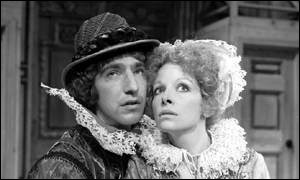 Alan Rickman and Anna Calder-Marshall performed in 1976
The Edinburgh festival began more than 50 years ago and is now a fixture of the Scottish capital's year - and the world's biggest arts festival. BBC News Online highlights key points in the festival's rise. 1947 Edinburgh's International Festival was launched by Rudolf Bing as a post-war initiative to re-unite Europe through culture. It proved so appealing that more visitors and performers came than there was room for. Eight theatre companies without venues camped out and performed in small buildings around the official festival building. 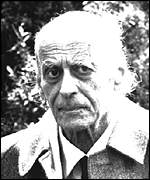 Rudolf Bing set the wheels in motion
|
This disparate bunch were so popular amongst the public that they returned to the festival the following year. Also up and running by this time was Edinburgh's International Film Festival, which serves as both a public and trade event and atracts its quota of screen stars. 1948 Journalist Robert Kemp commented that the additional, spontaneous productions springing up around the main international festival were "the fringe of the official festival drama". The name stuck, and the rise of the Fringe continued unsuppressed alongside the official event. 1950s The international festival was a highbrow and tightly organised event, aiming to attract only performers of the "highest artistic standard". The Fringe, on the other hand, was pretty much out of control. There was no box office or programme. But in 1954, Fringe groups - mainly from the top UK universities - held their first meeting. "We are cutting each other's throats," said one producer. They agreed to set up a central box office and programme for the following year, and in 1958 the embryonic Fringe Society was formed. 1960s By now, there were 19 groups performing at the Fringe but the number continued to increase over the next few years. 1967 saw an early example of the controversy for which the Fringe has become known with Rochelle Owens' production Futz - a play about bestiality. 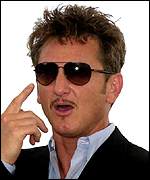 Hollywood actor Sean Penn is among the stars to have visited the film festival
|
By 1969 there were 57 groups involved in the Fringe and the society was staffed by volunteers. It also received a landmark mention in the official brochure of the international festival. A rethink of the Fringe society became necessary and it was relaunched as a limited company at the home of the chairman, Lord Grant. 1970s The decade saw steps to make the Fringe a fully professional event. John Milligan was appointed as the first Fringe administrator followed by Alastair Moffat, who held the post for six years. Awards, such as the Fringe Firsts, were established to attract attention to the dozens of new plays being shown. The summer buzz in Edinburgh inspired the creation of more arts events. The TV festival began in 1975 and the jazz festival in 1978. Both soon rose in profile and now attract a loyal following. 1980s By 1981, 494 groups performed at the Fringe. This year also saw the inaugural Perrier Award for comedy, won by the Cambridge Footlights featuring then unknowns Emma Thompson and Stephen Fry. 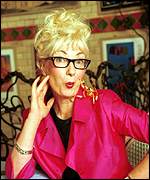 Jenny Eclair was the first woman to win the Perrier
|
Other winners since have included Sean Hughes, Frank Skinner, Lee Evans, the League of Gentlemen and Jenny Eclair. In 1989, an industrial dispute at the local authority - the issuer of temporary theatre licences - threatened to close down the entire Fringe. But after heated negotiations, the Fringe was saved 10 days before it was due to begin. 1990s The Fringe box office entered the age of technology, making buying tickets quicker and easier - and banishing the once famous queues up the high street to the past. 1991 saw a clash between the Fringe and the International Festival, when Frank Dunlop - outgoing director of the international event - called its rival a "third-rate circus". The Fringe's 50th anniversary in 1997 was followed by a landmark move the following year to an earlier start, a week ahead of the international event. 2000s The Fringe continues to grow year on year. In 2001, more than 600 groups from 49 countries performed 1,462 shows in 175 venues across the city. Relations between the Fringe and the international festival are generally good as both respect each other's different flavour. | | Top Entertainment stories now: Links to more Entertainment stories are at the foot of the page. |


 E-mail this story to a friend