|
 |
 | | | | | | ||||||||||||||||||||||||||||||||||||||||||||||||||||||||||||||||||||||||||||||||||||||||||||||||||||||||||||||||||||||||||||||||||||||||||||
| | | You are in: Business | ||||||||||||||||||||||||||||||||||||||||||||||||||||||||||||||||||||||||||||||||||||||||||||||||||||||||||||||||||||||||||||||||||||||||||||||
|
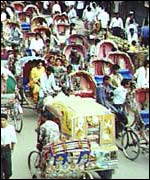
| | Friday, 20 December, 2002, 16:55 GMT Police purge for Dhaka rickshaws  Baby taxis cause dangerous fumes and smog Dhaka, the Bangladeshi capital, will soon be purged of the motorised rickshaws that ply its streets. The Bangladeshi Government has reportedly ordered the police to seize any auto-rickshaws after 31 December to check they meet environmental standards. The government is planning strict enforcement of its year-end deadline to abolish the auto-rickshaws - known as "baby taxis" - arguing that they cause serious air pollution. Environmental studies have found the exhaust fumes from the baby taxis' two stroke engines contain high quantities of lead, which can be dangerous to people's health. At least three government ministers met a senior police officer on Thursday to discuss how to enforce the ban, the local Independent newspaper reported. 'No U-turn' Twelve teams of police will operate 49 check points and nine mobile units to catch any drivers breaking the ban on baby taxis.
About 7,000 baby taxis are thought to still have licences out of about 35,000 when the ban was announced in August. The paper quoted a government official as saying there was no going back as the government was determined to do away with baby taxis. Tens of thousands of baby taxi drivers went on strike when the government first announced the decision to ban the three-wheeled vehicles. Some held a hunger strike. The drivers say every baby-taxi provides at least two jobs. The decision to abolish baby taxis has also caused concern among commuters, who struggled to get to work during the drivers' strike. Baby taxis accounted for 33% of all kilometres driven in Dhaka, according to the World Bank, which funded a programme to teach drivers to maintain them properly to stop the worst pollution. Replacements Since August, the government has imported buses with the help of a loan from the Asian Development Bank.
Another option is for drivers to buy environmentally friendly baby taxis that run on compressed natural gas (CNG) rather than petrol and fuel oil. Drivers running CNG-converted baby taxis with two-stroke engines after the start of 2003 may find them impounded for tests, the Independent reported. There are believed to be at least 2,700 CNG-converted baby taxis. The government wants drivers to upgrade to four stroke engine "mishuks" or minibuses. The meeting of the cabinet level task force was chaired by Communications Minister Nazmul Huda, the newspaper said. New rules on carrying metres will also be enforced to improve regulation of the sector. | | See also:  06 Aug 02 | South Asia 31 Jan 02 | South Asia 20 Jul 98 | South Asia 15 Jan 99 | South Asia 09 Oct 98 | South Asia 02 Oct 98 | South Asia Internet links: The BBC is not responsible for the content of external internet sites Top Business stories now: Links to more Business stories are at the foot of the page. | ||||||||||||||||||||||||||||||||||||||||||||||||||||||||||||||||||||||||||||||||||||||||||||||||||||||||||||||||||||||||||||||||||||||||||||
 | |
|  E-mail this story to a friend E-mail this story to a friend |
| |
| Links to more Business stories |
| | | ||
 | ||||
 | | Back to top
| ||
| ---------------------------------------------------------------------------------- To BBC Sport>> | To BBC Weather>> | To BBC World Service>> ---------------------------------------------------------------------------------- © MMIII | News Sources | Privacy |