|
 |
 | | | | | | |||||||||||||||||||||||||||||||||||||||||||||||||||||||||||||||||||||||||||||||||||||||||||||||||||||||||||||||||||||||||||||||||||||||||||||||||||||||||||||||||||||||||
| | | You are in: South Asia | |||||||||||||||||||||||||||||||||||||||||||||||||||||||||||||||||||||||||||||||||||||||||||||||||||||||||||||||||||||||||||||||||||||||||||||||||||||||||||||||||||||||||||
|
| | Tuesday, 6 August, 2002, 15:04 GMT 16:04 UK Rickshaw strike cripples Dhaka 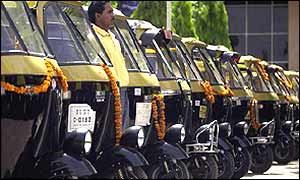 Auto-rickshaws are common throughout South Asia
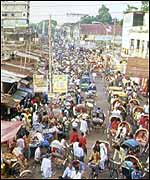
Tuesday's strike forced hundreds of thousands of middle-class commuters to use the city's already overcrowded public buses to get to work, and there were long queues at bus stops. With nearly a quarter of all vehicles off the roads, Dhaka was spared the usual traffic jam seen on any normal working day. Futile protests The striking "baby taxi" drivers staged protests in different parts of the city, and some of them joined a hunger strike in front of a mausoleum in central Dhaka.
They are driven by two-stroke engines, and use a mix of petrol and oil as fuel, emitting a high volume of pollutants into the air. Communication Minister Nazmul Huda insisted on Monday that the government would not back down on its plan, and said paramilitary troops would enforce the ban. The government also warned that any "baby taxi" fitted with a two-stroke engine found on the streets of Dhaka after 1 September would be seized and scrapped by the police. Awareness campaign To drum up support for the ban, the government has also decided to launch a campaign to raise public awareness about the polluting vehicles. Most people agree with ministers that the auto-rickshaws are to blame for Dhaka's notoriously poor air quality. But many people are critical of the government for failing to make any alternative arrangements before imposing the ban. "Today's strike gave us a glimpse of how it will look like after these baby taxis are taken off the streets," said Tanveer Shams, who works in a private bank. "I have been waiting here for half an hour looking for a taxi cab, but found none and there is no bus and no scooter. "How can we travel in this city if they don't make any alternative arrangement." Government schemes The government says it is taking urgent measures to address the problem. With the support of the Asian Development Bank, officials are now working on a project to replace the "baby taxis" with new, imported vehicles using cleaner fuel like compressed natural gas (CNG). The Asian Development Bank will provide $80m to import 300 buses and 2000 three-wheelers fitted with four-stroke engines. The government hopes the arrival of these new vehicles within the next couple of months will go some way towards easing the suffering of city commuters. | | See also:  31 Jan 02 | South Asia 03 May 01 | South Asia 15 Jan 99 | South Asia 02 Oct 98 | South Asia Internet links: The BBC is not responsible for the content of external internet sites Top South Asia stories now: Links to more South Asia stories are at the foot of the page. | |||||||||||||||||||||||||||||||||||||||||||||||||||||||||||||||||||||||||||||||||||||||||||||||||||||||||||||||||||||||||||||||||||||||||||||||||||||||||||||||||||||||||
| |
|  E-mail this story to a friend E-mail this story to a friend |
| |
| Links to more South Asia stories |
| | | ||
 | ||||
 | | Back to top
| ||
| ---------------------------------------------------------------------------------- To BBC Sport>> | To BBC Weather>> | To BBC World Service>> ---------------------------------------------------------------------------------- © MMIII | News Sources | Privacy |