
|
 |
 | | | | | | |||||||||||||||||||||||||||||||||||||||||||||||||||||||||||||||||||||||||||||||||||||||||||||||||||||||||||||||||||||||||||||||||||||||||||||
| | | You are in: Business | |||||||||||||||||||||||||||||||||||||||||||||||||||||||||||||||||||||||||||||||||||||||||||||||||||||||||||||||||||||||||||||||||||||||||||||||
|
| | Tuesday, 3 December, 2002, 17:36 GMT FSA world's 'most accountable regulator' 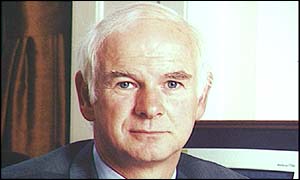 Sir Howard Davies: Keeping a close eye on the housing market As the Financial Services Authority celebrates its first anniversary, chairman Sir Howard Davies, answers readers' questions, in the second of a two part series. Do you think that the powers of the FSA, since it gained super-regulator status are now so great that there are few effective checks on the work of the agency? Not at all, we were given our powers by parliament under the Financial Services and Markets Act. A number of checks and balances were set out in the Act to prevent us acting in an arbitrary way and which give wide protections to firms and individuals.
In fact, in cases where we issue fines or other disciplines there is a right of appeal to the independent Financial Services and Markets Tribunal. In many ways our powers are more constrained than those of the previous regulators. We have clear statutory objectives and general duties. These provide both political accountability and legal accountability through the scope for judicial review. We have a clear governance structure with the chairman and the board appointed by the Treasury, with a majority of non-executive directors. We have a number of reporting mechanisms, including an annual report to the Treasury, laid before parliament, on how we have carried out our functions and met our statutory objectives, and an annual public meeting to discuss the annual report. There are also statutory consumer and practitioner panels which monitor our work. There is also a new system of independent investigation of complaints against the FSA, with an independent complaints commissioner who reports publicly. Put simply, we are also probably the most accountable regulator in the world. Will the new financial advice system, recently announced, better protect consumers and reduce mis-selling scandals? We announced the abolition of the polarisation regime on 21 November and we are convinced that a freer market will help consumers as the old polarisation rule has not delivered the consumer benefits hoped for. In future, consumers will find it easier to shop around for the best product, and providers will be free of the anti-competitive constraints that have made it difficult for them to offer consumers that choice. No-one can say with certainty that there will be no cases of mis-selling in future. But the new single regulatory system and the wider and more flexible regulatory tools that we enjoy mean we are in a better position than our predecessors to identify and head off incipient mis-selling at an earlier stage. Why can't the FSA be more like the US's Securities and Exchange Commission, which works proactively to root out problems and, when issues arise, deal with them properly instead of being seen as pandering to vested interests. Regulators around the world have different responsibilities and powers and comparisons of this kind are rather meaningless. The accusation of pandering to vested interests and big finance is sometimes thrown at us by consumer organisations but does not really stand up. Firms say we are biased towards the interests of consumers - we can not win.
We have taken significant enforcement action, including sizeable fines against a number of large firms in the last two or three years. And we have investigations currently going on into aspects of City firms' operations, eg analysts' research, and short selling. And we are sometimes charged by the industry with using our powers too mightily - the Association of British Insurers (ABI) once described us as the "provisional wing of the Consumers Association". So we are somewhere in the middle, we trust. How would you rate the standard of financial education in the UK? There has been a marked improvement in recent years in which we have played a big part through our work with the Department for Education and Skills (DFES) to embed financial literacy teaching into the curriculum in both primary and secondary schools. Continuing to develop financial literacy, including at adult level, is a very important part of delivering one of our statutory objectives - to raise pubic understanding of the financial system - and we will continue to devote a lot of attention to this. I understand that the FSA proposes cutting benefits to its final salary pension scheme. If it does so won't other firms follow suit? Is the FSA concerned that such actions will damage its credibility? Like many other companies, we have to address a potential deficit in the future liabilities of our final salary pensions scheme disclosed by the requirements of new accounting standard FRS 17. We are consulting staff about a number of options. We need to find a solution which is both fair to the members of the pensions scheme and also to the firms we regulate whose fees ultimately pay for the pensions and who cannot be expected to provide an open cheque for this. This is an issue for us to resolve as a company and is not associated with our public credibility in delivering to our statutory objectives. Whilst it should be welcomed that the FSA has to consult widely on new regulations, I feel its consultative documents could be greatly improved. Do you plan to address this? We are required to consult publicly on rules and regulatory guidance and to provide feedback statements on consultations. We place great importance on the consultation process and we are very much appreciate the involvement of the industry in this which helps us to achieve our aim to have an effective and proportionate rule book. Although some consultation papers are by their nature more technical than others, and they vary in length, I don't accept that they are impenetrable and all go through a plain English vetting process before being published. Very often it is the industry who call for more detailed rules and guidance to give greater certainty and this is one factor than can bulk out consultation material. But in the next few months we shall be launching on our website an improved version of the handbook which will be easier to navigate and will provide the platform for further improvements in ease-of-use during 2003. And we are making extra efforts to try to shorten the papers. I know some of them have been pretty long! | | See also:  03 Dec 02 | Business 02 Dec 02 | Business 29 Nov 02 | Business 22 Nov 02 | Business 20 Nov 02 | Business 21 Nov 02 | Business 01 Dec 01 | Business Internet links: The BBC is not responsible for the content of external internet sites Top Business stories now: Links to more Business stories are at the foot of the page. | |||||||||||||||||||||||||||||||||||||||||||||||||||||||||||||||||||||||||||||||||||||||||||||||||||||||||||||||||||||||||||||||||||||||||||||
| |
|  E-mail this story to a friend E-mail this story to a friend |
| |
| Links to more Business stories |
| | | ||
 | ||||
 | | Back to top
| ||
| ---------------------------------------------------------------------------------- To BBC Sport>> | To BBC Weather>> | To BBC World Service>> ---------------------------------------------------------------------------------- © MMIII | News Sources | Privacy |





