|
 |
 | | | | | | |||||||||||||||||||||||||||||||||||||||||||||||||||||||||||||||||||||||||||||||||||||||||||||||||||||||||||||||||||||||||||||||||||||||||||||||||||||||||||||||||||||||||||
| | | You are in: Business | |||||||||||||||||||||||||||||||||||||||||||||||||||||||||||||||||||||||||||||||||||||||||||||||||||||||||||||||||||||||||||||||||||||||||||||||||||||||||||||||||||||||||||||
|
| | Wednesday, 9 October, 2002, 09:58 GMT 10:58 UK Rice producers in 'cartel' talks 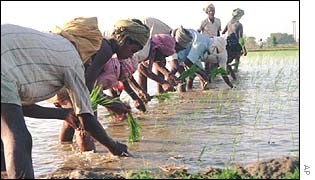 Producing countries keep exporting too much rice The world's leading rice producers are meeting in Bangkok, in the hope of forming an unofficial cartel and boosting world prices. Officials from China, India, Pakistan, Vietnam and Thailand have agreed to open a rice "secretariat", an office that will oversee world markets in the same way that Opec oversees much of the trade in oil. Wednesday's meeting aims to pin down a minimum global price below which the five countries - which together account for more than three-quarters of world rice output - will not sell. The minimum price under discussion is reckoned to be equivalent to 1997 levels, since when prices have fallen by almost one-third. Prices plunge Without drastic action, rice producers fear prices will only fall further.
But at the same time, global per capita consumption is to fall by some 2%, leading to an increasing surplus on world markets. Although increasing populations should help buoy demand, the increasing diversity of diets in poor, rice-dependent countries is bad news for sellers in the long run. Sensitive plants Producers also face problems in the short term. Cartel-type behaviour is common in commodity industries, especially in Asia; Thailand, Indonesia and Malaysia recently signed a deal to prop up rubber prices. But rice is regarded as especially sensitive, since it plays such a vital nutritional role in some of the world's least developed countries. In Bangladesh, Cambodia and Myanmar, for example, rice accounts for three-quarters of the average supply of dietary energy, and more than two-thirds of protein. Aid agencies and donors, therefore, are keen to keep rice affordable. Producer countries, meanwhile, argue that development is best served by paying farmers a profitable price for their crop. | |
See also:  06 Sep 02 | Science/Nature 19 Aug 02 | Science/Nature 21 Feb 02 | Africa 21 Nov 01 | Business 23 Aug 01 | South Asia Internet links: The BBC is not responsible for the content of external internet sites Top Business stories now: Links to more Business stories are at the foot of the page. | |||||||||||||||||||||||||||||||||||||||||||||||||||||||||||||||||||||||||||||||||||||||||||||||||||||||||||||||||||||||||||||||||||||||||||||||||||||||||||||||||||||||||||
| |
|  E-mail this story to a friend E-mail this story to a friend |
| |
| Links to more Business stories |
| | | ||
 | ||||
 | | Back to top
| ||
| ---------------------------------------------------------------------------------- To BBC Sport>> | To BBC Weather>> | To BBC World Service>> ---------------------------------------------------------------------------------- © MMIII | News Sources | Privacy |