|
 |
 | | | | | | ||||||||||||||||||||||||||||||||||||||||||||||||||||||||||||||||||||||||||||||||||||||||||||||||||||||||||||||||||||||||||||||||||||||||||||||||||||||||||||||||||||||||||||
| | | You are in: Business | ||||||||||||||||||||||||||||||||||||||||||||||||||||||||||||||||||||||||||||||||||||||||||||||||||||||||||||||||||||||||||||||||||||||||||||||||||||||||||||||||||||||||||||||
|
| | Wednesday, 16 October, 2002, 09:27 GMT 10:27 UK Hunger follows crisis in Argentina 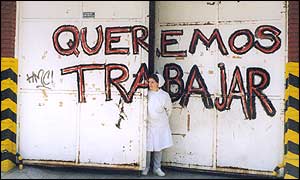 "We want to work": Argentina's despairing refrain
Marcelo gazes blankly from his chipped blue cot at the Children's Hospital in Tucuman, a city of some 1 million inhabitants in the north-west of Argentina. His stick-thin limbs stir feebly. The skin around his ballooning abdomen is taut.
"He doesn't speak," she says. "He's seven, and he can't talk or walk." A healthy weight for a seven-year-old is 22 kilos. Marcelo weighs only 10 kilos. Marcelo has not got a disease. Argentina may be the world's fifth-largest exporter of agricultural produce, but his symptoms derive from malnutrition. He is one of about 20,000 children in the province of Tucuman who are starving because their parents can no longer afford to feed them.
The economic crisis that memorably saw three presidents in office over two weeks is sinking its teeth into Argentina's population. An estimated 56% of Argentines are now living below the breadline, up from 36% in May 2001. Winners, losers Just a few miles from where Marcelo lies dying, farmers are congratulating themselves on a particularly good year - paradoxically the crisis has made them wealthier. Argentina is the world's leading exporter of lemons and the world's second ranking exporter of soybeans, both of which Tucuman produces in large quantities.
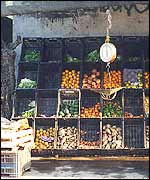
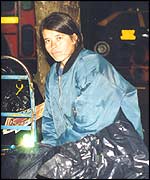
During the 1990s the Argentine currency, the peso, was held at a rate of one to one with the US dollar. But at the end of last year, market pressure forced the peso from its straitjacket, and saw it fall to more than three pesos to $1. As agricultural exports are priced in dollars, farmers now find it lucrative to export and are reluctant to sell on the domestic market. As a result, the price of a basic weekly shop surged by a staggering 64.7% in the first seven months of this year. Night shift With unemployment running at 22%, many families are finding it hard to pay those prices. Late on a crisp winter evening, I meet a squat, unshaven man, called Cordoba, on the streets of the capital, Buenos Aires. Aged about 50, he is one of at least 100,000 cartoneros, or rubbish sifters, who flood into the city after dark to sort recyclable waste from the rubbish.
"I used to work in a construction company," he says. "But the construction industry has collapsed and about half the workers have been laid off. "My wife and I now both work through the night picking the rubbish. "We usually earn about 6 pesos [$1.60] a day from the recycling depot. With this we must feed our four children." Even though economic output has fallen by more than 20% in the last four years, most Argentines believe that the crisis is going to get much worse.
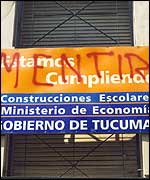
The government has been trying, with increasing desperation, to cut back on public spending to generate the surplus needed to service the foreign debt. But, as people all over the country told me, there is no fat left to cut. Many public services are grinding to a halt - even a Tucuman doctor told me that he was going hungry, because he has not been paid for weeks. "Argentina is bankrupt," says Daniel Muchnik, one of the country's leading economic analysts. "Our economic output is worth only $97bn and we have a total foreign debt of $240bn. "We are supposed to make debt repayments of $20bn in 2003. But, with foreign reserves of just $9bn, we simply can't do that."
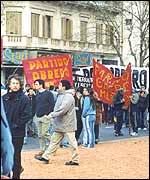
At the moment, the government is negotiating with International Monetary Fund officials to try to avoid a massive default. But fractured political leadership has placed Argentina in a weak negotiating position. 'IMF out!' That has not cast the IMF in a positive light in the eyes of Argentines, who feel their country has been left to flounder after dutifully following IMF prescriptions throughout the 1990s. Driving through the rustbelt of deserted factories around Buenos Aires city, the signs of discontent with both domestic and foreign authorities are plain. "IMF out", "get rid of all the politicians" graffiti demand. Almost every week, city squares are filled with demonstrators. In the absence of any obvious viable political leadership, many ordinary Argentines have taken to organising among themselves. Each week piqueteros - "picketers" - blockade main highways into Buenos Aires in protest at lack of work. They have negotiated a small state benefit of 150 pesos ($40) per month for unemployed family heads.
And neighbourhood assemblies have sprung up across the country, where people work out how best to tackle local problems. Not all of the initiatives have succeeded. Some of the barter markets set up in local areas, where goods can be exchanged through a system of credit notes, fell victim to internal inflation and profiteering. But the country is witnessing a surge of popular daring and creativity. Factory takeover A year ago, workers at a bakery in Buenos Aires were horrified when the owner told them the business had gone bankrupt. Sergio was one of those laid off. "We didn't think we could do anything," he told me. The business closed down in October 2001. "But then, the events of 19 and 20 December happened," he said, referring to the mass protests that overthrew the government. "Our local neighbourhood assembly was formed, and we made contact with them. Together we decided to try and get the bakery going again." The bakery workers occupied the factory for 45 days, supported by local people. Even so, about half of the occupants gave up the fight, scared by the presence of police. But eventually the government caved in, allowing the workers to take legal responsibility for the business.
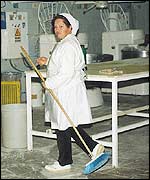
The bakery is now full of activity, with pizzas browning in large ovens and clouds of flour dust swirling in the air. "It was a victory," Sergio smiles. "And I think we can make it. "The previous owners creamed off too much profit. "We are still ploughing most of our income back into the business and take only small salaries, and slowly we are rebuilding the business." Sergio says that 100 businesses in Buenos Aires province have been similarly wrested from their owners. But, for all the organisational activity, the gravity of Argentina's plight is impossible to escape. The bakery's suppliers want to raise flour prices 240% in line with export prices. Like many other Argentines, Sergio may find that all his hard work has come to nothing. | |
See also:  04 Oct 02 | Business 26 Sep 02 | Business 25 Sep 02 | Business 19 Sep 02 | Business 27 Nov 98 | UK 14 Aug 02 | Business 13 Aug 02 | Business Top Business stories now: Links to more Business stories are at the foot of the page. | ||||||||||||||||||||||||||||||||||||||||||||||||||||||||||||||||||||||||||||||||||||||||||||||||||||||||||||||||||||||||||||||||||||||||||||||||||||||||||||||||||||||||||||
| |
|  E-mail this story to a friend E-mail this story to a friend |
| |
| Links to more Business stories |
| | | ||
 | ||||
 | | Back to top
| ||
| ---------------------------------------------------------------------------------- To BBC Sport>> | To BBC Weather>> | To BBC World Service>> ---------------------------------------------------------------------------------- © MMIII | News Sources | Privacy |