|
 |
 | | | | | | ||||||||||||||||||||||||||||||||||||||||||||||||||||||||||||||||||||||||||||||||||||||||||||||||||||||||||||||||||||||||||||||||||||||||||||||||||||
| | | You are in: Business | ||||||||||||||||||||||||||||||||||||||||||||||||||||||||||||||||||||||||||||||||||||||||||||||||||||||||||||||||||||||||||||||||||||||||||||||||||||||
|
| | Tuesday, 15 October, 2002, 12:44 GMT 13:44 UK Investors wary about Russian industry 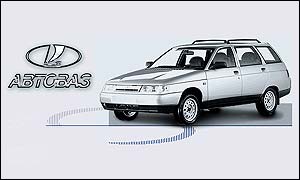 Russia's car industry is no longer low-tech, low quality
Despite a groundbreaking new joint-venture between US global car giant General Motors and the country's largest car maker AvtoVaz, Russia is failing to convince foreigners to invest.
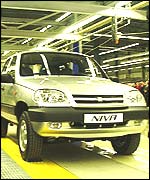
FDI fell 25% in the first half of this year to a paltry $1.1bn (�720m), according to figures released Tuesday by the Central Bank of Russia. But there are exceptions that may lead to a new wave of investments in the future. A remarkable deal To great fanfare and the blessing of Orthodox priests,the first Chevrolet Niva 4x4s have rolled off the GM-AvtoVaz production line in the southern city of Togliatti, known here as the Detroit of Russia. "This investment heralds a new epoch in the development of the domestic automotive industry," said the chairman of the joint venture, Vladimir Kadannikov, at the plant's opening ceremony. The $330m GM-AvtoVaz factory, co-financed by the European Bank for Reconstruction and Development, is one of the largest post-Soviet investments in Russia outside the oil and gas sector. The project should help modernise the country's low-tech, low-quality car sector. The deal is remarkable as a rare example of foreigners investing in Russia's middle weight industry, a high-cost long-term sector that until now most have steered clear of, preferring the fast returns of light industries like food processing. Mismatched expectations Russia is in the middle of an impressive legislative reform programme to cut red tape and make doing business here easier. But implementation is getting bogged down in Russia's legendary bureaucracy. Long term investments are hit particularly hard. "Russia's investment climate is pretty dismal to put it mildly," said Christof Ruhl, the World Bank's chief economist in Moscow. "When I went to congratulate legislators this summer they said 'So we managed to cut the number of inspections from 100 to 10 - but what if each of those inspections now takes 10 times as long?'" It is a problem that has lead to a mismatch between what foreigners want to invest in and what the country actually needs, according to Mr Ruhl. Infrastructure Natural resources such as oil, gas and metals are Russia's most prized investment sectors. But that is precisely where domestic entrepreneurs in these cash-rich export-oriented industries say they can manage on their own. Instead, the government wants to attract FDI for infrastructure projects to modernise crumbling utility sectors like power generation and railways, which are currently being prepared for privatisation. The sums needed here however are huge and investors don't want to commit capital to such long-term schemes without a sound regulatory framework, which is still lacking. Production industries Then there's manufacturing. With abundant resources and a highly skilled workforce, producing machines and technology for re-export should offer attractive opportunities. It is a sector that Russia desperately needs to develop to diversify the economy away from its over-dependence on natural resources. But ask investors what their biggest concerns in Russian are, and one problem usually tops the list; the country's predatory bureaucracy and the customs administration in particular. That leaves slim but attractive pickings in light production industries targeted at Russian consumers. And, indeed, successful investments by Ikea, Nestle, Coca-Cola and many others show that business in Russia can be lucrative. Mentality clash Structural factors like these though are not the only reason FDI remains so low. When President Vladimir Putin came to power he stressed the importance of creating a "dictatorship of law". Today, however, corruption, an ineffective legal system and what some see as a deep ambivalence towards foreigners making money in Russia means investing here is so far still risky. "Russians welcome investors who buy factories, re-employ people, and pay taxes. But when they see how easy it is to make these industrial assets profitable some of them resent it and try to take control themselves," says Roland Nash of Renaissance Capital in Moscow, who points out that these are now the exception rather than the rule. Stories of failed or lost investments still occur regularly, the tactics in these battles as ingenious as they are troubling. Shutting off power to factories, forging shareholder registers to change ownership, or insider sales of company assets at rock-bottom prices to friends and cronies are all well documented examples. Ring-Fence protection It is an environment that requires investors to go to great lengths to secure their interests. Despite GM's bold move, they have taken no chances. The investment is ring-fenced to ensure its independence. Gas and electricity supplies come direct from the utility companies, not through the AvtoVaz plant where they can be interfered with. The joint-venture management is GM's and they have even constructed a separate rail link to ensure control of their supply route. Hundreds of millions of dollars were stripped from AvtoVaz in the mid 1990s by corruption, and the company is alleged to have links to organised crime. In April police launched an investigation called 'Cyclone 2' to crack down on the criminal groups still operating at the plant. GM is fortunate; it has both the financial muscle and the political weight to take such measures to protect it's investment. Smaller companies are not so lucky. The need to diversify A recent investment attractiveness survey of 34 countries showed that Russia has leapt from near bottom to 17th place since last year, suggesting a new wave of FDI may be on the way. That is thanks to domestic reforms, strict fiscal management and US/EU recognition of the country's market economy status. But foreigners are not taking the plunge yet. If the government is to convince them to do so, it must follow up the recent flurry of legislation with an aggressive drive to disarm Russia's army of bureaucrats and make sure the new laws do not become just another administrative barrier. | | See also:  01 Sep 02 | Business 12 Jul 02 | Business 10 Jul 02 | Country profiles 25 Jun 02 | Business 07 Jun 02 | Business 25 May 02 | From Our Own Correspondent 08 Apr 02 | Europe 19 Feb 02 | Business 06 Feb 02 | Business Internet links: The BBC is not responsible for the content of external internet sites Top Business stories now: Links to more Business stories are at the foot of the page. | ||||||||||||||||||||||||||||||||||||||||||||||||||||||||||||||||||||||||||||||||||||||||||||||||||||||||||||||||||||||||||||||||||||||||||||||||||||
| |
|  E-mail this story to a friend E-mail this story to a friend |
| |
| Links to more Business stories |
| | | ||
 | ||||
 | | Back to top
| ||
| ---------------------------------------------------------------------------------- To BBC Sport>> | To BBC Weather>> | To BBC World Service>> ---------------------------------------------------------------------------------- © MMIII | News Sources | Privacy |