|
 |
 | | | | | | |||||||||||||||||||||||||||||||||||||||||||||||||||||||||||||||||||||||||||||||||||||||||||||||||||||||||||||||||||||||||||||||||||||||||||
| | | You are in: Business | |||||||||||||||||||||||||||||||||||||||||||||||||||||||||||||||||||||||||||||||||||||||||||||||||||||||||||||||||||||||||||||||||||||||||||||
|
| | Wednesday, 2 October, 2002, 15:22 GMT 16:22 UK South African business leader quits 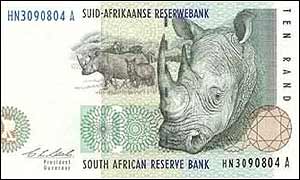 No one factor can be blamed for the rand's fall South Africa's business organisations could be poised for a shake-up following the resignation of the controversial head of the South African Chamber of Business. Kevin Wakeford, the chamber's chief executive, resigned unexpectedly - with immediate effect - on Tuesday for "personal reasons", days before the organisation's annual conference. Many observers believe, however, that had come under pressure to quit. "I'm only surprised it wasn't earlier," one analyst told BBC News Online. Mr Wakeford will be spending a few weeks "lying low" with his family in the wake of the "amicable" separation, Sacob spokesman Marius Louw said. His departure could allow a closer relationship between the myriad organisations representing black, white and Afrikaner businesspeople. Rubbing the wrong way Mr Wakeford is best known for instigating the government inquiry into the 40% slump in the value of the rand last year, after he accused Deutsche Bank, state oil company Sasol and speculators of illegal foreign exchange dealings.
Deutsche Bank has since agreed to restore 800m rand to the government's reserves, although the inquiry found it had done nothing illegal. Sources within South Africa's investment community told BBC News Online that Sasol was not alone in finding Mr Wakeford troublesome. Tito Mboweni, Reserve Bank governor, is said to have been "fuming" about the implication that the bank was not doing its job properly in defending the rand. Break up Meanwhile, Sacob's bipartite membership is fracturing. The group started life as a union between the small-business focused regional chambers of commerce and major industrial corporations. And, besides the problems surrounding relations with Sasol and other corporations, regional chambers are also beginning to secede. The Chamber of Commerce in Johannesburg is looking to ally with that of Cape Town, bypassing Sacob. Durban's chamber is also considering a "reassessment" of its relationship with Sacob. Realignment Efforts to realign South Africa's fragmented landscape of business organisations - divided along ethnic and sector lines - have also run into difficulties. Sacob is trying to broker a union with the National Federation of Chambers of Commerce (Nafcoc), which represents black businesspeople. The plan has run into a welter of legal difficulties amid factional arguments within Nafcoc. But Mr Wakeford's exit could help break the deadlock, officials from large corporations and analysts say. His departure could see the creation of an over-arching body similar to the UK's Confederation of British Industry, to which all interests could belong. | | See also:  12 Sep 02 | Business 01 Aug 02 | Business 05 Jul 02 | Business 06 May 02 | Business 08 Apr 02 | Business 02 Apr 02 | Business 15 Oct 01 | Business Internet links: The BBC is not responsible for the content of external internet sites Top Business stories now: Links to more Business stories are at the foot of the page. | |||||||||||||||||||||||||||||||||||||||||||||||||||||||||||||||||||||||||||||||||||||||||||||||||||||||||||||||||||||||||||||||||||||||||||
| |
|  E-mail this story to a friend E-mail this story to a friend |
| |
| Links to more Business stories |
| | | ||
 | ||||
 | | Back to top
| ||
| ---------------------------------------------------------------------------------- To BBC Sport>> | To BBC Weather>> | To BBC World Service>> ---------------------------------------------------------------------------------- © MMIII | News Sources | Privacy |