
|
 |
 | | | | | |||||||||||||||||||||||
| | You are in: Business | |||||||||||||||||||||||||
 | | Tuesday, 2 April, 2002, 13:30 GMT 14:30 UK Doubt cast over rand probe 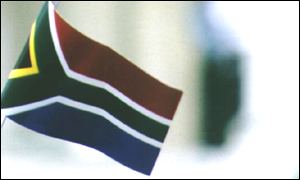 The rand flagged last year, but a public inquiry is underpinning gains again The man whose allegations of wrongdoing in the foreign exchange markets helped trigger a public inquiry into last year's 38% fall in the value of South Africa's rand has said he now thinks he may have spoken too soon. But Kevin Wakeford, head of the South African Chamber of Business, said he still stood by the main thrust of his argument. This was that local and international companies were instrumental in pushing the rand lower so as to reduce the dollar price of the deals they were making.
It suggested a "strong likelihood" that Deutsche Bank and Sasol, which makes liquid fuel out of coal, had colluded to push the rand lower. Both companies have denied the allegations. The matter is under investigation by the South African Reserve Bank, which will give evidence on Friday. In March, the bank's governor, Tito Mboweni, said that no evidence of wrongdoing had been found. Behind the scenes A fall in the value of the rand would have reduced the cost of a structured share transaction designed by Deutsche to help Sasol buy Condea, a subsidiary of German utility RWE. The letter suggested the $1.14bn transaction broke South African exchange control regulations, and Mr Wakeford speculated that other companies may have done likewise. "It is obvious that there could be many more permutations of such dubious financial methods... actions of this nature are bound to contribute to the peril of our country," he told the commission in a written submission. Both companies have rejected the allegations, saying the deal - struck in February 2001 - long predated the rand's slide. Conspiracy theories Mr Wakeford told the commission, chaired by well-respected judge John Myburgh, that he may have been too quick in reaching his conclusions on the basis of information from a source he refused to name.
So far, the hearings have yet to produce any evidence of underhand, illegal or unethical dealings. Most analysts have pinned the blame for the rand's slide on a combination of uncertainty bred by the volatile, crisis-ridden Zimbabwean economy to the north, the ease with which "hot money" can flow out of South Africa compared to other emerging economies, and the need for South African companies to pay offshore dividends on their joint listings overseas. On the way up But the mere existence of the inquiry has damped down the more aggressive speculators in the rand, observers say. That has contributed to an 18% gain in the rand since the beginning of the year from its low of about 13.85 to the US dollar. Rules requiring South African businesses to repatriate their profits within six months have also driven dollar sales, underpinning the value of the rand, economists say. But the rand's weakness has led to two interest rate hikes, each raising rates by a full percentage point, and concerns persist about the medium-term effect on inflation of rising prices for imports. | | See also:  Internet links: The BBC is not responsible for the content of external internet sites Top Business stories now:  Links to more Business stories are at the foot of the page. | |||||||||||||||||||||||
|
Links to more Business stories |
 | | ^^ Back to top News Front Page | World | UK | UK Politics | Business | Sci/Tech | Health | Education | Entertainment | Talking Point | In Depth | AudioVideo ---------------------------------------------------------------------------------- To BBC Sport>> | To BBC Weather>> ---------------------------------------------------------------------------------- © MMIII|News Sources|Privacy  |


 E-mail this story to a friend