|
 |
 | | | | | | |||||||||||||||||||||||||||||||||||||||||||||||||||||||||||||||||||||||||||||||||||||||||||||||||||||||||||||||||||||||||||||||||||||||||||||||||||||||||
| | | You are in: Business | |||||||||||||||||||||||||||||||||||||||||||||||||||||||||||||||||||||||||||||||||||||||||||||||||||||||||||||||||||||||||||||||||||||||||||||||||||||||||||
|
| | Tuesday, 24 September, 2002, 16:28 GMT 17:28 UK US sets pace for financial recovery 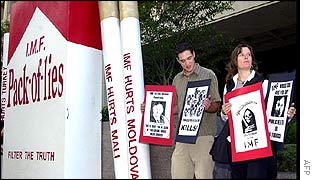 The meeting is expected to attract thousands of protestors
They are slightly curious events: although supremely high-powered, these twice-yearly meetings of the International Monetary Fund (IMF) and the World Bank don't generally take decisions. There have been exceptions - some of the key breakthroughs on debt relief for the poorest countries happened inside the IMF and World Bank headquarters. For the most part though, decisions are taken throughout the year by officials based permanently in Washington acting on instructions from back home. What these gatherings are, though, is an opportunity for finance ministers from many of the 180-plus member countries to chew the fat about whatever international economic problems are bothering them. And this year, there is enough to give them an uncomfortable dose of indigestion. Confidence wilts But first, take a look at what they probably don't have to worry about. A year ago, the great shadow over the world economy was September 11. The terrorist attacks were seen as likely to destroy consumer confidence, and send the economy into a downturn. For a decade, America had been driving the rest of the world on. So, it seemed, bad economic news in the US was going to be very bad for rest of us too. In fact the US economy was already in recession and it started recovering a few weeks after September 11. Falling investment Instead, corporate America seems to have caused a longer lasting headache for economic policy makers than Osama bin Laden or al-Qaeda did last year. Dishonest accounts, perhaps some outright fraud, have undermined the confidence of people who invest in the stock market. And now shareholders are beginning to doubt whether even those companies that have told the truth - which is most - are really as profitable and productive as everyone seemed to think. Investment by business has now been falling for nearly two years. The prophets of doom say the US is now paying for the excesses of the 1990s - a time when businesses invested too much and share prices went to unsustainable highs. Oil dominates And as the political tension in the middle east grows, oil prices are an increasing potential worry. The possibility of a war with Iraq has sustained the price of crude oil at a fairly high level - traders fear that military conflict could disrupt oil supplies. There is a long history of recessions following hikes in oil prices - last year's US downturn probably owed something to oil prices. Current levels aren't sky high, but oil importing countries think they are very uncomfortable. Just about everyone agrees that the stock market was over exuberant, irrationally so, to borrow the phrase which the Fed Chairman Alan Greenspan used - six years ago, believe it or not. But the idea of a much wider hangover is still a minority view, and is not shared by Mr Greenspan himself. Even so, it is a nagging ache for the finance ministers gathering in Washington. And the US really is centre stage for so many of them. If anything goes awry here, the chances are the rest of it will feel it too. | |
See also:  19 Sep 02 | Business 19 Sep 02 | Business 13 Sep 02 | Business 23 Sep 02 | Business Internet links: The BBC is not responsible for the content of external internet sites Top Business stories now: Links to more Business stories are at the foot of the page. | |||||||||||||||||||||||||||||||||||||||||||||||||||||||||||||||||||||||||||||||||||||||||||||||||||||||||||||||||||||||||||||||||||||||||||||||||||||||||
| |
|  E-mail this story to a friend E-mail this story to a friend |
| |
| Links to more Business stories |
| | | ||
 | ||||
 | | Back to top
| ||
| ---------------------------------------------------------------------------------- To BBC Sport>> | To BBC Weather>> | To BBC World Service>> ---------------------------------------------------------------------------------- © MMIII | News Sources | Privacy |