|
 |
 | | | | | | ||||||||||||||||||||||||||||||||||||||||||||||||||||||||||||||||||||||||||||||||||||||||||||||||||||||||||||||||||||||||||||||||||||||||||||||||||||||||||||||||||||||||
| | | You are in: Business | ||||||||||||||||||||||||||||||||||||||||||||||||||||||||||||||||||||||||||||||||||||||||||||||||||||||||||||||||||||||||||||||||||||||||||||||||||||||||||||||||||||||||||
|
| | Thursday, 12 September, 2002, 09:50 GMT 10:50 UK Black and white unite against steel giant 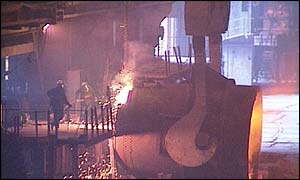 Vanderbijlpark produces more than 2.7 million tons of steel
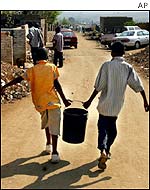
In South Africa, poor black and white communities in Vanderbijlpark, south-west of the city have joined hands in a struggle against Africa's largest steel producer, Iscor. BBC World Service's African Perspective programme has investigated the plight of the residents of Steel Valley who claim that for the last 40 years the industrial giant has polluted their water, degraded their environment and brought sickness and suffering to their families. The communities are now embarking on a new course of action as 16 families take the company to court to demand compensation for their suffering. In profit Iscor - or the Iron and Steel Corporation of South Africa - started out as a state agency, a creation of the white minority apartheid regime and was privatised in 1994 with the advent of democracy in South Africa.
Today the company ranks as the biggest producer of flat steel products in Africa. Last year, it boasted operating profits of more than 820 million rand ($77.5m; �49.8m), with the Vanderbijlpark plant producing more than 2.7 million tons of steel. A High Court ruling obtained by Iscor earlier this year prevents the company and the applicants in the court case from talking directly to the media about the situation. 'Continuous fight' However Samson Mokoena, chairman of the Steel Valley Crisis Committee and spokesperson for the residents revealed why they were taking action.
"We believe we've been fighting for sustainable development for more than 40 years. Most people have lost their properties here, they've lost their animals. "We've been fighting and fighting and to us it's a continuous thing," he said. A key witness for the defence is Professor Phillip Lloyd, a chemical engineer who chairs the committee of South Africa's chemical industry. Professor Lloyd claims that waste water has seeped into the underground water supply in Vanderbijlpark, polluting it. Water samples taken from the boreholes of the plot owners around the Iscor plant have revealed traces of these chemicals. Proving a link In 1984, a water sample taken from Plot 66 in Steel Valley by the local government board was declared unfit for human consumption. But there is no proven link between the water and the illnesses people are suffering and Professor Lloyd claimed this would be hard to prove.
"It's very difficult to prove cause and effect when you come to linking disease to - particularly environmental impact," he said. "What we have done instead is looked at the bodies of the people if you like. Not for symptoms of disease, but for symptoms of pollution. "Their urine has got as much tar as the equivalent of a person who smokes about 80 cigarettes a day...and that's even among people who don't smoke." No livestock Henk Fourie, the pastor at the Church Vanderbijlpark Tuine and long term resident has also spoken out about the effect the steel company has had on the community. "When I moved in 20 years ago there wasn't a smallholding that didn't have his cows, his few sheep, his hens and his gardens and everything," he said. "At this stage I'll be surprised if you find on 10% of the smallholdings any livestock, or any farming activity whatsoever. It doesn't work here any more." Putting things right The residents also blame the South African Government for not caring about their health. However Mike Muller, the Director General of the Department of Water Affairs denies that Iscor is ignoring the community's concerns. "We believe that Iscor is actually serious about putting right the things that have gone wrong," he said. "The worst possible thing we could do for the area of Vanderbijlpark is to demand actions that effectively put Iscor out of business. "They would not be able to do any rehabilitation and the social economic situation in that fairly deprived and poor area would be dramatically aggravated." Iscor refused to comment on the allegations made by both residents and independent scientists because of the High Court gagging order. But it plans to defend the pending court action. The hearing will take place at the Johannesburg High Court on 30 September. | |
See also:  06 Mar 02 | Business 04 Sep 02 | Africa 29 Aug 02 | Africa 04 Sep 02 | Africa Internet links: The BBC is not responsible for the content of external internet sites Top Business stories now: Links to more Business stories are at the foot of the page. | ||||||||||||||||||||||||||||||||||||||||||||||||||||||||||||||||||||||||||||||||||||||||||||||||||||||||||||||||||||||||||||||||||||||||||||||||||||||||||||||||||||||||
| |
|  E-mail this story to a friend E-mail this story to a friend |
| |
| Links to more Business stories |
| | | ||
 | ||||
 | | Back to top
| ||
| ---------------------------------------------------------------------------------- To BBC Sport>> | To BBC Weather>> | To BBC World Service>> ---------------------------------------------------------------------------------- © MMIII | News Sources | Privacy |