
|
 |
 | | | | | | |||||||||||||||||||||||||||||||||||||||||||||||||||||||||||||||||||||||||||||||||||||||||||||||||||||||||||||||||||||||||||||||||||||||||||||||||||||||||
| | | You are in: Business | |||||||||||||||||||||||||||||||||||||||||||||||||||||||||||||||||||||||||||||||||||||||||||||||||||||||||||||||||||||||||||||||||||||||||||||||||||||||||||
|
| | Wednesday, 24 July, 2002, 09:09 GMT 10:09 UK Uruguay gets new economy minister 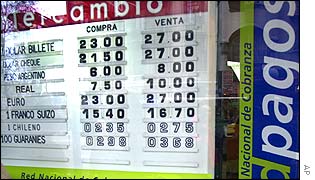 The peso's value is falling and the economy shrinking Uruguay's president has appointed Alejandro Atchugarry as the country's new economy minister. Mr Atchugarry is a ruling party senator with a reputation as a skilled negotiator. His predecessor, Alberto Bension, resigned on Monday, together with the head of the central bank, after losing the support of parts of the ruling coalition. Mr Bension had been trying to push through austerity measures wanted by the international lending agencies to tackle the South American country's three-year recession. Pressure grew for him to resign, following massive capital outflows which had caused the currency to plunge. Political crisis President Batlle has moved quickly in the hope of ending a growing sense of political crisis brought about by Mr Bension's resignation. He has stressed the change of economy minister does not mean a change in policies. Congress must pass legislation "to carry out undoubtedly difficult tasks that cannot be delayed," he said. "It's probably what the doctor ordered, a change in faces since Bension and his team were worn out," said Arturo Porzecanski, a senior economist at investment bank ABN-Amro in Montevideo. President Jorge Batlle is also expected to announce a new head of the central bank later on Wednesday. Investment consultant and development specialist Julio de Brun is being tipped for the job. "He's the big candidate right now," Reuters news agency quoted an official who did not wish to be named as saying. Economic crisis The Uruguayan economy - which is largely dependent on agriculture, tourism and banking - hasn't seen any growth since 1999. Earlier this year the economy shrank by 10% in three months, as the effects of the Argentine crisis were felt across South America. Uruguay is weighed down by billions of dollars of debt. Last month, the International Monetary Fund lent the country an additional $1.5bn. Consumer spending is weak, tax revenues are low, international reserves are down 68% so far this year, the government's budget deficit stands at 4.2% and bank deposits are dwindling. Since exchange rate controls were abandoned last month, the value of the Uruguayan peso has fallen 30%. One US dollar now buys 25 peso. Panic withdrawals The currency's fall followed mass withdrawals of cash by Argentines from their Uruguayan bank accounts. The central bank, Banco Central del Uruguay, then launched an investigation into alleged illegal capital flight by the country's largest private bank, Banco Commercial. This investigation prompted a second wave of panic withdrawals, this time by the Uruguayan people. | |
See also:  23 Jul 02 | Business 05 Jul 02 | Business 20 Jun 02 | Business 18 Jun 02 | Business 29 May 02 | Business 07 Mar 02 | Country profiles 19 Dec 01 | Business 04 Feb 02 | Business Internet links: The BBC is not responsible for the content of external internet sites Top Business stories now: Links to more Business stories are at the foot of the page. | |||||||||||||||||||||||||||||||||||||||||||||||||||||||||||||||||||||||||||||||||||||||||||||||||||||||||||||||||||||||||||||||||||||||||||||||||||||||||
| |
|  E-mail this story to a friend E-mail this story to a friend |
| |
| Links to more Business stories |
| | | ||
 | ||||
 | | Back to top
| ||
| ---------------------------------------------------------------------------------- To BBC Sport>> | To BBC Weather>> | To BBC World Service>> ---------------------------------------------------------------------------------- © MMIII | News Sources | Privacy |






