|
 |
 | | | | | | |||||||||||||||||||||||||||||||||||||||||||||||||||||||||||||||||||||||||||||||||||||||||||||||||||||||||||||||||||||||||||||||||||||||||||||||||||||||||||||||||||||||||||||||||||||||||||||||||||||||||||||||||||||||||||||
| | | You are in: Business | |||||||||||||||||||||||||||||||||||||||||||||||||||||||||||||||||||||||||||||||||||||||||||||||||||||||||||||||||||||||||||||||||||||||||||||||||||||||||||||||||||||||||||||||||||||||||||||||||||||||||||||||||||||||||||||||
|
| | Thursday, 25 July, 2002, 16:35 GMT 17:35 UK Feeling the market's bottom 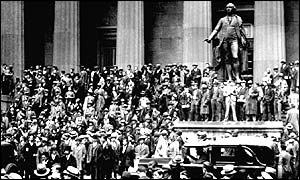 Bulls draw comfort from history, but may be deluded
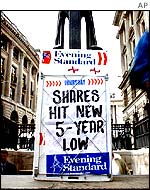
Feeling for the bottom is a good way to get a slap in the face. But more and more investors believe that a bottom - or to put it more pleasantly, the low point in a stock market - is starting to emerge. After a catastrophic week's trading, the culmination of two months of undiluted bad news for stock markets, there seem to be signs that a turnaround cannot be far away. How soon, and how prolonged such salvation may be is a matter for frenzied - and largely fruitless - debate. BBC News Online presents a guide to the key arguments. Out on a limb The bottom-feelers are certainly a brave bunch: pundits generally find it safer to tip a trend to continue, than to forecast a change in direction. But there are sensible reasons for predicting that Friday's steadying in global stock markets could be the beginning of a prolonged upswing.
Up to a point, shares can be fundamentally over- or under-, valued, a measure normally calculated by looking at the relationship between a share's price and the stream of dividend income it brings in. Historically, in developed Western countries, this ratio has tended to be around 15: a share that returns its owner �1 a year in dividends will be valued at around �15. Ratio relations Over the past few years, these so-called price-earnings ratios have gyrated wildly from this historical norm. At present, FTSE 100 shares have a P/E ratio of 19, while New York Stock Exchange shares are on roughly 39.
At first glance, these look wildly high, indicating that shares - especially US ones - could fall much further without dislocating fundamentals. But the tech revolution of the past few years, the argument goes, has uprooted those fundamentals, taking us into an era of permanently higher P/E ratios. In any case, current ratios are only half their levels before other major crashes of the twentieth century, while the sort of tech-oriented shares listed on the Nasdaq market had ratios of 200 and upwards before the tech bubble burst. A tendency to bounce This argument has history on its side, the bottom-feelers argue.
After 11 September, UK shares dropped by about one-third before correcting, and shares are now almost one-third down from their recent peak at the end of last year. The only exceptions to this rule, Mr Schwartz points out, were at times of enormous social or political stress - the Great Depression, the cataclysmic outbreak of World War II, the oil-price shock of the early 1970s. "That's not exactly the situation we are in right now," he told the BBC's World Business Report. "We might not be setting the world on fire... but the economic situation is pretty placid right now." Only uncertainty is certain Hogwash, say the bottom-doubters.
Bottom-doubters argue that the past behaviour of a market is no indication of its future direction. There is no way to predict the next jump an individual share will make, they say; magnified over thousands of shares in millions of trades, that randomness becomes absolute. That does not mean that shares will collapse - it simply implies that they are just as likely to go up, or remain the same. Crisis of confidence The bottom-shunners, the market's many bears, fall back on fundamentals.
The bursting of the tech bubble, and then this year's accounting scandals, have damaged that faith beyond measure, and 11 September - although economically harmless enough - was a reminder that life is uncertain. Crucially, nothing has happened this week materially to alter the new bleak view. Until it does - a measurable improvement in US accounting ethics, for example - the bears will see no reason to stop selling. With returns in a range of markets, from bonds to housing, far better than the stock markets, there is no shortage of other places to put their money. Safe as houses? So who's right? Of course, if your correspondent knew that, he would be doing something more lucrative than being your correspondent. Sensible pundits point to the long term, in which returns from the stock markets generally outpace those from today's fashionable bonds. But if, as seems likely, 2002 becomes the third straight year of negative returns from the equity markets, that record will start to tarnish. Already, millions of passive market investors - savers, pension owners and other blameless types - have been badly burnt without so much as taking a view on the market. At the moment, the only sensible position to take may be no position at all. | |
See also:  12 Jul 02 | Business 11 Jul 02 | Business 10 Jul 02 | Business 10 Jul 02 | Americas 10 Jul 02 | Business 26 Jun 02 | Business Internet links: The BBC is not responsible for the content of external internet sites Top Business stories now: Links to more Business stories are at the foot of the page. | |||||||||||||||||||||||||||||||||||||||||||||||||||||||||||||||||||||||||||||||||||||||||||||||||||||||||||||||||||||||||||||||||||||||||||||||||||||||||||||||||||||||||||||||||||||||||||||||||||||||||||||||||||||||||||||
| |
|  E-mail this story to a friend E-mail this story to a friend |
| |
| Links to more Business stories |
| | | ||
 | ||||
 | | Back to top
| ||
| ---------------------------------------------------------------------------------- To BBC Sport>> | To BBC Weather>> | To BBC World Service>> ---------------------------------------------------------------------------------- © MMIII | News Sources | Privacy |