|
 |
 | | | | | | |||||||||||||||||||||||||||||||||||||||||||||||||||||||||||||||||||||||||||||||||||||||||||||||||||||||||||||||||||||||||||||||||||||||||||||||||||||||||||||||||||||
| | | You are in: Business | |||||||||||||||||||||||||||||||||||||||||||||||||||||||||||||||||||||||||||||||||||||||||||||||||||||||||||||||||||||||||||||||||||||||||||||||||||||||||||||||||||||||
|
| | Thursday, 4 July, 2002, 22:45 GMT 23:45 UK Sri Lanka moves to revive economy Sri Lanka spent up to $1bn a year on its civil war
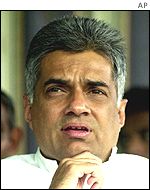
The Sri Lankan Prime Minister, Ranil Wickremesinghe, has said he hopes economic growth will reach 3.7% by the end of the year, after the country experienced negative growth for the first time in its history in 2001.
But he tried to reassure the Sri Lankan public that things would eventually get better. Since Mr Wickremesinghe took office more than six months ago, the cost of living has steadily risen, disappointing those who had hoped the cease-fire with Tamil Tiger rebels would shore up the economy. Costly war Mr Wickremesinghe explained that spending on defence would remain high until the year 2008 because of unpaid bills for previous arms purchases. Sri Lanka has been spending up to $1bn a year on the war, and the government said last year's rebel attack on the country's main airport inflicted another billion dollars worth of damage. The Prime Minister also listed many other reasons why the Sri Lankan economy was hurting. He said the rupee has been depreciating against the dollar while government borrowing has risen sharply in the last decade. The government has also been forced to spend money to rectify the country's electricity crisis. No short-term solutions Mr Wickremesinghe said his government had taken steps to revive the economy and asked for the public's continued support. He said the finance minister would make a public statement about the privatisation of state-run organisations in a few days, and added that they had discussed the possibility of getting banks to lower interest rates. Mr Wickremesinghe's speech will give little cheer to those who had hoped for early signs of a peace dividend. Fuel prices have already risen 8% this year, with huge knock on effects on transportation charges and food prices. A kilo of rice that cost 30 rupees at the start of the year is now nearer 40 rupees. Donors and foreign investors are waiting for more stable progress towards peace before they make commitments. | |
See also:  31 May 02 | Business 28 May 02 | Business 21 May 02 | Business 06 May 02 | Business 01 May 02 | Business 29 Apr 02 | Business Internet links: The BBC is not responsible for the content of external internet sites Top Business stories now: Links to more Business stories are at the foot of the page. | |||||||||||||||||||||||||||||||||||||||||||||||||||||||||||||||||||||||||||||||||||||||||||||||||||||||||||||||||||||||||||||||||||||||||||||||||||||||||||||||||||||
| |
|  E-mail this story to a friend E-mail this story to a friend |
| |
| Links to more Business stories |
| | | ||
 | ||||
 | | Back to top
| ||
| ---------------------------------------------------------------------------------- To BBC Sport>> | To BBC Weather>> | To BBC World Service>> ---------------------------------------------------------------------------------- © MMIII | News Sources | Privacy |