|
 |
 | | | | | | |||||||||||||||||||||||||||||||||||||||||||||||||||||||||||||||||||||||||||||||||||||||||||||||||||||||||||||||||||||||||||||||||||||||||||||||||||||||||||||||||||||||||||||||||
| | | You are in: Asia-Pacific | |||||||||||||||||||||||||||||||||||||||||||||||||||||||||||||||||||||||||||||||||||||||||||||||||||||||||||||||||||||||||||||||||||||||||||||||||||||||||||||||||||||||||||||||||||
|
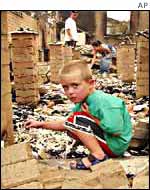
| | Friday, 24 January, 2003, 01:27 GMT Why Australia's on fire  Fire in Canberra destroyed hundreds of homes
The hot, dry summertime climate in the south-eastern states has combined with devastating effect with one of the worst droughts on record. Add human error into this volatile mix, and a dangerous situation can become uncontrollable. There are claims that mismanagement, inexperience and a lack of preparation by the authorities contributed to the scale of the recent disaster in Canberra.
The leader of the city's fire fighters union, Mike Cochrane, said: "The community is entitled to be outraged by the handling of the firestorm". Eight years ago, the authorities in the Australian capital were warned in an especially commissioned report of the urgent need to reduce the fire hazards around the city. It appears nothing was done. Emergency road access into national parks was not established and strategic burning of undergrowth and trees was not undertaken. Fire expert Phil Cheney said public pressure had prevented the emergency services carrying out the necessary precautions. "The main restriction was probably concern about the smoke and perhaps the residents disliking having the bush burnt on a regular basis around them," he said. Some politicians have blamed forestry officials for the crisis.
But Brian Gilligan from the New South Wales National Parks and Wildlife Service said no amount of preparation would have saved parts of Canberra from the most ferocious firestorm seen in 100 years. "Periodically we have extreme fire seasons and they occur regardless of land tenure or detailed land management. Hazard reduction is not some magic panacea, some magic wand that's suddenly going to take away the fire risk," he said. Perfect conditions One official said the conditions around Canberra had created "the perfect fire". Flames up to 100 metres high tore through suburban streets. The capital's Chief Minister, Jon Stanhope, has defended the emergency response and said that even if the city had "fire trucks queuing up bumper to bumper" the disaster would not have been averted. The enormity of Canberra's wildfire crisis - four people dead and more than 500 homes reduced to ash - will lead to a major rethink of Australia's relationship with the bush and how homes can be safely woven into the delicate fabric of the forests and scrubland.
Many of Australia's native plants burn easily. The eucalypts' high oil content makes them particularly fire prone. Vast swathes of dry grass - common in mid-to-late summer - are also extremely flammable. Urban design Urban design expert Dr Danny O'Hare told Sydney's Daily Telegraph that it is time Australia learned to live sensibly - and securely - in the bush. "After the disastrous fires in Melbourne in the 1980s, people rebuilt with the same kinds of houses using the same sorts of materials. We should be learning," he said. Fire has shaped the Australian landscape. It is essential for the regeneration of many plant species and was the most powerful tool used by Australia's Aborigines to manage the land before European colonisation. Recent history is littered with death and devastation caused by forest fires. In February 1983, more than 70 people were killed in South Australia and Victoria. 2000 houses were lost. Two decades later, Australia is one of the world's most fire-prone countries and is still at the mercy of the wildfires. Prime Minister John Howard has warned that the bushfire threat may never be conquered. "Nobody can give an absolute guarantee about the ravages of nature", he said. | |
See also:  23 Jan 03 | Asia-Pacific 20 Jan 03 | Asia-Pacific 20 Jan 03 | Asia-Pacific 20 Jan 03 | Science/Nature 20 Jan 03 | Asia-Pacific Internet links: The BBC is not responsible for the content of external internet sites Top Asia-Pacific stories now: Links to more Asia-Pacific stories are at the foot of the page. | |||||||||||||||||||||||||||||||||||||||||||||||||||||||||||||||||||||||||||||||||||||||||||||||||||||||||||||||||||||||||||||||||||||||||||||||||||||||||||||||||||||||||||||||||
 | |
|  E-mail this story to a friend E-mail this story to a friend |
| |
| Links to more Asia-Pacific stories |
| | | ||
 | ||||
 | | Back to top
| ||
| ---------------------------------------------------------------------------------- To BBC Sport>> | To BBC Weather>> | To BBC World Service>> ---------------------------------------------------------------------------------- © MMIII | News Sources | Privacy |






 The community is entitled to be outraged by the handling of the firestorm