|
 |
 | | | | | | ||||||||||||||||||||||||||||||||||||||||||||||||||||||||||||||||||||||||||||||||||||||||||||||||||||||||||||||||||||||||||||||||||||||||||||||||||||||||||||||
| | | You are in: Asia-Pacific | ||||||||||||||||||||||||||||||||||||||||||||||||||||||||||||||||||||||||||||||||||||||||||||||||||||||||||||||||||||||||||||||||||||||||||||||||||||||||||||||||
|
| | Wednesday, 4 December, 2002, 07:06 GMT China 'blocks 10% of websites' 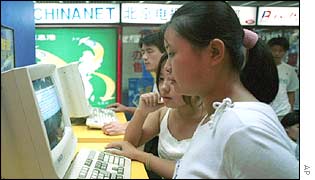 The study tried to gauge the extent of internet curbs As many as one in 10 websites may be deliberately blocked to users in China, a US study suggests. Sites containing sexually explicit content were among those blocked, but they also included sites on sensitive topics such as Tibet, Taiwan, and dissident activity, say the authors of the report, at Harvard University's Berkman Center.
Attempts by Chinese authorities to restrict web access have been previously documented, but this study indicates the scope of the curbs. "People often ask us and ask others, what is it that's blocked in China?" said one the authors, Ben Edelman. "For that kind of a person, we found that producing a list of blocked sites was helpful." The authors compared access to the internet from the US and China. They requested 204,012 distinct websites, and say they found that more than 50,000 were inaccessible from at least one point in China - but not the US - on at least one occasion. To try to ensure that glitches in service provision were not responsible, the authors then attempted to access blocked sites again from another point in China. They found that at 18,931 sites were unavailable from two points in China on separate days. Restricted sites fell into some of the following categories:
The authors suggest that methods of denying access to certain parts of the web from China have grown more sophisticated, with at least four filtering methods now in operation. But although "there is some evidence that the [Chinese] government has attempted to prevent the spread of unwanted material by preventing the spread of the internet itself, [there is] a concomitant desire to capture the economic benefits of networked computing," the report says. This has led to multiple strategies to control access, such as encouraging internet use in cyber cafes "rather than in private spaces so that customers' surfing can be physically monitored by others". | | See also:  03 Sep 02 | Technology 23 Jul 02 | Business 08 Jul 02 | Business 05 Jun 02 | Asia-Pacific 06 Aug 02 | Technology 27 Nov 02 | Asia-Pacific 11 Oct 02 | Asia-Pacific 31 Jul 02 | Technology Internet links: The BBC is not responsible for the content of external internet sites Top Asia-Pacific stories now: Links to more Asia-Pacific stories are at the foot of the page. | ||||||||||||||||||||||||||||||||||||||||||||||||||||||||||||||||||||||||||||||||||||||||||||||||||||||||||||||||||||||||||||||||||||||||||||||||||||||||||||||
| |
|  E-mail this story to a friend E-mail this story to a friend |
| |
| Links to more Asia-Pacific stories |
| | | ||
 | ||||
 | | Back to top
| ||
| ---------------------------------------------------------------------------------- To BBC Sport>> | To BBC Weather>> | To BBC World Service>> ---------------------------------------------------------------------------------- © MMIII | News Sources | Privacy |