|
 |
 | | | | | | ||||||||||||||||||||||||||||||||||||||||||||||||||||||||||||||||||||||||||||||||||||||||||||||||||||||||||||||||||||||||||||||||||||||||||||||||||||||||||||||
| | | You are in: Asia-Pacific | ||||||||||||||||||||||||||||||||||||||||||||||||||||||||||||||||||||||||||||||||||||||||||||||||||||||||||||||||||||||||||||||||||||||||||||||||||||||||||||||||
|
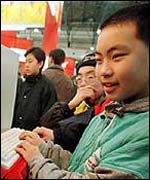
| | Friday, 11 October, 2002, 15:38 GMT 16:38 UK China bars under-16s from cybercafes 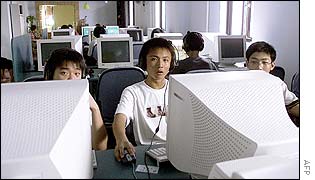 Cybercafes have mushroomed in China China has barred children under the age of 16 from entering internet cafes, under tough new rules further restricting access to the web. The new rules also prevent the construction of cybercafes within 200 metres (650 feet) of middle and elementary schools, the official Xinhua news agency reports. The restrictions follow a fire at a Beijing cybercafe in June which killed 25 people, mostly students, who were trapped inside as the windows were barred. Offenders risk a fine of up to 15,000 yuan ($1,800) and may have their operating licences cancelled, Xinhua said. Censorship The rules, which take effect on 15 November, also ban net surfers from spreading material on "evil cults," as well as superstition, rumours or libel.
Gambling, violence and pornography cannot be promoted on the internet, under the regulations. Content deemed to be anti-constitutional or a threat to national unity and China's territorial integrity is also banned. Cybercafes - which are massively popular in China - will only be allowed to operate between 0800 and midnight local time. They will also be barred from locking doors and windows during business hours. Since the June blaze, China's state media have printed pages of commentary and angry letters from parents, alleging that their children are wasting time and money on computer games. The authorities launched a massive crackdown on cybercafes after the blaze, arguing that some 90% of those in Beijing were unlicensed. Two juveniles were sentenced to life in prison for lighting the fire and thousands of cybercafes were closed for inspection. Internet use has soared since China opened up its networks to the world wide web in 1994. Internet boom By mid-2002, China had leapt to second place in the world with 45 million internet users, compared to just half a million in October 1997. The Chinese Culture Ministry says China has more than 200,000 cybercafes - only 46,000 of them legally registered. The Chinese Communist Party closely monitors internet sites it regards as subversive and blocks several web sites. The spiritual movement Falun Gong has been especially targeted in the crackdown. An official hi-tech police - nicknamed "the great firewall of China" - keeps watch over the internet 24 hours a day. The authorities recently blocked access to the popular search engines Google and AltaVista. | | See also:  26 Sep 02 | Business 24 Sep 02 | Business 23 Sep 02 | Business 12 Sep 02 | Technology 06 Sep 02 | Technology 05 Sep 02 | Technology 03 Sep 02 | Technology 03 Sep 02 | Technology 19 Jun 02 | Asia-Pacific Internet links: The BBC is not responsible for the content of external internet sites Top Asia-Pacific stories now: Links to more Asia-Pacific stories are at the foot of the page. | ||||||||||||||||||||||||||||||||||||||||||||||||||||||||||||||||||||||||||||||||||||||||||||||||||||||||||||||||||||||||||||||||||||||||||||||||||||||||||||||
| |
|  E-mail this story to a friend E-mail this story to a friend |
| |
| Links to more Asia-Pacific stories |
| | | ||
 | ||||
 | | Back to top
| ||
| ---------------------------------------------------------------------------------- To BBC Sport>> | To BBC Weather>> | To BBC World Service>> ---------------------------------------------------------------------------------- © MMIII | News Sources | Privacy |