|
 |
 | | | | | | ||||||||||||||||||||||||||||||||||||||||||||||||||||||||||||||||||||||||||||||||||||||||||||||||||||||||||||||||||||||||||||||||||||||||||||||||||||||||||||||||||||||||||
| | | You are in: Asia-Pacific | ||||||||||||||||||||||||||||||||||||||||||||||||||||||||||||||||||||||||||||||||||||||||||||||||||||||||||||||||||||||||||||||||||||||||||||||||||||||||||||||||||||||||||||
|
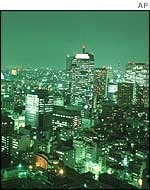
| | Monday, 26 August, 2002, 13:07 GMT 14:07 UK Feeling the heat in Tokyo 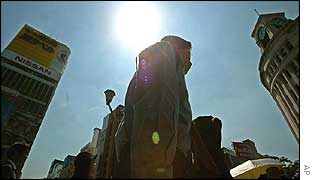 Buildings store the heat and sends temperatures soaring
Tokyo may be located in the temperate zone, but you would never notice during the summer months. Temperatures in the Japanese capital have been soaring into the mid and high 30s Centigrade - hotter than many of the tropical cities of south-east Asia.
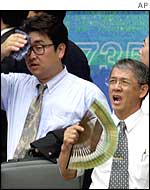
The phenomenon is blamed on rapid urban development since the World War II. The ever expanding sprawl of concrete traps the heat and blocks out cooling breezes. 'Heat island' Even the famously resilient salaryman is showing signs of wilting. "It's so much hotter than the countryside, you can feel the heat radiating off the asphalt," said one suited office worker emerging into the cauldron of the central business district. Tokyo is an extreme example of what is known as a "heat island" - often several degrees warmer than the rural districts that surround it.
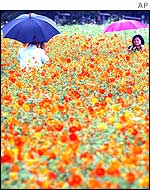
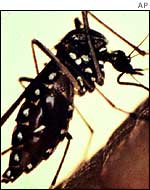
The growing use of air conditioners adds to the problem - pumping out huge volumes of hot air - as do the millions of vehicles circulating in the city. Cases of heat stroke are on the rise, tropical vegetation is taking root and new types of mosquito are threatening to bring exotic diseases. Finally the city authorities are trying to take action. They have identified a lack of green space as a key part of the problem - Tokyo has far fewer parks than most large cities in Europe and North America. Roof gardens plan The metropolitan government now requires all large new buildings to build roof gardens to help absorb the heat.
Twenty samples are laid out on the roof of the city hall - a soothing carpet of green to shield the building from the sun. "We have so few parks and we're using up too much electricity for air conditioning," says a visitor from neighbouring Yokohama, who has come to inspect the gardens. "I'm worried about global warming and I think more gardens will help cool things down." Radical measures The government wants to see gardens on 50% of all roofs in the urban area. It is also looking at proposals to install cooling pipes under the city and, to repave roads with material that absorbs less heat.
"It's not enough - the best way to stop the heat island effect in Tokyo is to preserve and expand green spaces on the ground - not only on the roof top," he said. But that does not appear to be happening. A new line of skyscrapers is going up in front of Tokyo Bay - a further obstacle to cool winds from the sea. Cases of heat stroke are rising each year, tropical plants are becoming more common and so are new types of mosquito carrying the threat of malaria and dengue fever. A once temperate city is now getting used to regular tropical nights, when temperatures remain above 25C. If there is any compensation for the added discomfort it is that the winters are getting warmer as well. | | See also:  12 Jul 02 | Asia-Pacific 24 Jul 01 | Asia-Pacific 19 Aug 02 | Science/Nature 24 Aug 02 | Country profiles Internet links: The BBC is not responsible for the content of external internet sites Top Asia-Pacific stories now: Links to more Asia-Pacific stories are at the foot of the page. | ||||||||||||||||||||||||||||||||||||||||||||||||||||||||||||||||||||||||||||||||||||||||||||||||||||||||||||||||||||||||||||||||||||||||||||||||||||||||||||||||||||||||||
| |
|  E-mail this story to a friend E-mail this story to a friend |
| |
| Links to more Asia-Pacific stories |
| | | ||
 | ||||
 | | Back to top
| ||
| ---------------------------------------------------------------------------------- To BBC Sport>> | To BBC Weather>> | To BBC World Service>> ---------------------------------------------------------------------------------- © MMIII | News Sources | Privacy |