|
 |
 | | | | | | |||||||||||||||||||||||||||||||||||||||||||||||||||||||||||||||||||||||||||||||||||||||||||||||||||||||||||||||||||||||||||||||||||||||||||||||||||||||||||||||||||||||||||||||||||||||||||||||
| | | You are in: Asia-Pacific | |||||||||||||||||||||||||||||||||||||||||||||||||||||||||||||||||||||||||||||||||||||||||||||||||||||||||||||||||||||||||||||||||||||||||||||||||||||||||||||||||||||||||||||||||||||||||||||||||
|
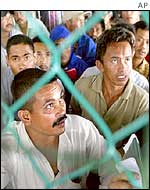
| | Saturday, 10 August, 2002, 07:01 GMT 08:01 UK Malaysia canes illegal immigrants 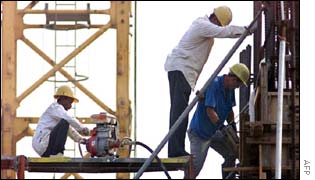 Many illegal migrants work in the construction industry Malaysian courts have ordered seven illegal immigrants to be jailed and caned in the first cases to be tried under the country's tough new immigration laws. Seven men, aged between 22 and 38, were convicted of staying in Malaysia without valid documents under legislation which came into effect at the end of July.
The seven were also sentenced to jail terms of between six months and two years. They will all be deported after serving their sentences. The migrants are the first to be tried under a new law which stipulates that foreign workers without relevant permits, and anyone who employs or harbours them, can be fined up to 10,000 ringgit ($2,600), imprisoned for five years and given up to six strokes of the cane. Amnesty period The law came into force after a four-month grace period during which illegal immigrants could leave the country freely with no questions asked.
The sentences against the seven men were handed out by courts in the central state of Selangor and the northern island state of Penang on Friday, officials told the Associated Press news agency. The immigration director of central Selangor state, Che Mamat Abdullah, told the Bernama news agency that a further 13 cases would be brought to court next week, while another 37 cases were currently under investigation. Employment shortages Employers and manufacturers have warned that mass deportations could hit the economy hard, as it relies heavily on foreign workers to do jobs that many locals refuse to do. Most immigrants are employed in menial plantation, construction or housekeeping jobs. Property developers say they may suffer serious losses because of a labour shortage, while thousands of hawkers and petty traders may have to close as a result of the crackdown. Malaysia is one of South East Asia's wealthiest countries and acts as a magnet for migrants fleeing poverty and violence in the rest of the region. On Thursday, Malaysia and Indonesia failed to reach agreement on the fate of illegal migrants. Speaking in Bali after a meeting with Indonesian President Megawati Sukarnoputri, Malaysian Prime Minister Dr Mahathir Mohamad said that unemployed foreigners were partly responsible for Malaysia's crime problems. Malaysia also blames the immigrants for contributing to a growth in social unrest, citing two riots by Indonesian workers earlier this year. | |
See also:  07 Aug 02 | Asia-Pacific 01 Aug 02 | Asia-Pacific 20 Jun 02 | Asia-Pacific 04 Apr 02 | Asia-Pacific 13 Dec 01 | Country profiles Internet links: The BBC is not responsible for the content of external internet sites Top Asia-Pacific stories now: Links to more Asia-Pacific stories are at the foot of the page. | |||||||||||||||||||||||||||||||||||||||||||||||||||||||||||||||||||||||||||||||||||||||||||||||||||||||||||||||||||||||||||||||||||||||||||||||||||||||||||||||||||||||||||||||||||||||||||||||
| |
|  E-mail this story to a friend E-mail this story to a friend |
| |
| Links to more Asia-Pacific stories |
| | | ||
 | ||||
 | | Back to top
| ||
| ---------------------------------------------------------------------------------- To BBC Sport>> | To BBC Weather>> | To BBC World Service>> ---------------------------------------------------------------------------------- © MMIII | News Sources | Privacy |