|
 |
 | | | | | | |||||||||||||||||||||||||||||||||||||||||||||||||||||||||||||||||||||||||||||||||||||||||||||||||||||||||||||||||||||||||||||||||||||||||||||||||||||||||||||||||||||||||||
| | | You are in: Americas | |||||||||||||||||||||||||||||||||||||||||||||||||||||||||||||||||||||||||||||||||||||||||||||||||||||||||||||||||||||||||||||||||||||||||||||||||||||||||||||||||||||||||||||
|
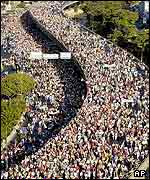
| | Sunday, 9 February, 2003, 00:58 GMT Venezuela opposition defies Chavez  The opposition says many oil-workers are still on strike More than 100,000 people have marched through the capital, Caracas, to protest against the policies of President Hugo Chavez. Blowing whistles and banging drums, protesters took to the streets to show solidarity with the 9,000 workers who were sacked from the state-owned oil company PDVSA during the strike.
The strike aimed at ousting the oil-rich country's president has weakened since it began on 2 December - but PDVSA strikers said on Saturday that their action could still bring down the government. "We're convinced that the oil industry cannot work without us," Reinaldo Michelena, one of those sacked, told Reuters news agency. "We'll keep on with this strike because the only way to get rid of this government is hitting at the economy." Marching under the national flag, protesters chanted "Chavez, you're a thief! PDVSA is not yours, it's everyone's!" Currency controls Mr Chavez, in office since 1998, faces a broad alliance of political parties, unions and private businesses who accuse him of authoritarianism and mismanaging the economy.
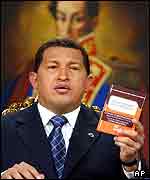
He says that most of PDVSA's 40,000 employees have returned to work. But the opposition denies this - they say thousands are still on strike in support of their sacked colleagues. The strike has battered Venezuela's economy, slashing its vital crude oil exports and causing severe domestic fuel shortages. The president has brought in tight foreign exchange curbs and price controls to shore up reserves and the national currency, the bolivar. Oil squeeze Announcing the controls on television this week, he waved a copy of Venezuela's penal code at viewers and accused opposition leaders of planning to take hard currency out of the country.
"They wanted to leave us without dollars, so we took away the key," he said. Mr Chavez - a former paratrooper and coup-leader - models himself on 19th Century Venezuelan nationalist hero Simon Bolivar and counts Cuban leader Fidel Castro among his friends. He maintains a base of support among Venezuela's poor but has antagonised nearly every other stratum of society. Government claims that oil output has now reached nearly 2 million barrels a day and exports are at 700,000 barrels per day have been challenged by the opposition. They estimate that output is still at a third of the 3.1 million barrels Venezuela produced in November before the strike. Average exports then were about 2.7 million barrels a day. | |
See also:  03 Feb 03 | Americas 04 Feb 03 | Americas Internet links: The BBC is not responsible for the content of external internet sites Top Americas stories now: Links to more Americas stories are at the foot of the page. | |||||||||||||||||||||||||||||||||||||||||||||||||||||||||||||||||||||||||||||||||||||||||||||||||||||||||||||||||||||||||||||||||||||||||||||||||||||||||||||||||||||||||||
 | |
|  E-mail this story to a friend E-mail this story to a friend |
| |
| Links to more Americas stories |
| | | ||
 | ||||
 | | Back to top
| ||
| ---------------------------------------------------------------------------------- To BBC Sport>> | To BBC Weather>> | To BBC World Service>> ---------------------------------------------------------------------------------- © MMIII | News Sources | Privacy |





 We're convinced that the oil industry cannot work without us