|
 |
 | | | | | | ||||||||||||||||||||||||||||||||||||||||||||||||||||||||||||||||||||||||||||||||||||||||||||||||||||||||||||||||||||||||||||||||||||||||||||||||||||||||||||||||
| | | You are in: Americas | ||||||||||||||||||||||||||||||||||||||||||||||||||||||||||||||||||||||||||||||||||||||||||||||||||||||||||||||||||||||||||||||||||||||||||||||||||||||||||||||||||
|
| | Wednesday, 27 November, 2002, 11:37 GMT Case study: Crown versus Michael Pringle 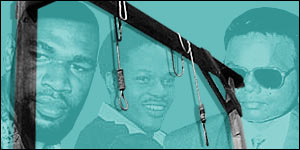 Michael Pringle was not present to hear his fate decided in the genteel surroundings of a committee room just off Downing Street. He was 4,500 miles away in a cell on Death Row in Jamaica. Pringle is one of about 250 men and women who have been sentenced to death in the English-speaking Caribbean. He was granted leave to appeal to the Privy Council's judicial committee, which is made up of British Law Lords. Shadow of the gallows If his appeals fail he will be hanged, a method of execution invented when Jamaica was part of the British Empire. Pringle was convicted in 1998 of the murder of a white American musician, Kevan Davidson, who had moved to Jamaica with her Rastafarian husband Donald.
Pringle had an obvious motive for killing her - revenge. She had accused him of raping and robbing her on an earlier occasion, although he was never convicted. Cellmate confession DNA tests also seemed to implicate him and the final blow appeared to come when Frederick Simmonds, a cellmate in Runaway Bay police station, gave evidence that Pringle had confessed to him. He was sentenced to death at St Ann Circuit Court on 30 October 1998 and his appeal was thrown out by the Jamaican Court of Appeal in July 2000. Four years later British barrister Edward Fitzgerald, QC, was standing before five Law Lords, who made up the Privy Council's Judicial Committee, the court of last resort for men like Pringle. The night before he had attended the funeral of one of his clients, Myra Hindley. Now he was fighting for the life of a man who he had never even met. Imperial legacy The learned countenances of long-dead Law Lords such as Earl Loreburn and Viscount Haldane of Cloan looked down on proceedings from their solid mahogany frames. The imperial furniture in the committee room, with its red leather chairs, high panelled walls and lime green ceiling, gave off a feeling of permanence and gravitas.
The Jamaican flag was absent from the courtroom and there were no black faces either - another reminder of the remoteness of the proceedings. But there was no lack of dedication and commitment. Mr Fitzgerald and his opposite number, James Guthrie QC, representing the Jamaican Government, argued their cases forcefully and the Law Lords listened attentively and answered probing questions in response. DNA tests questioned Mr Fitzgerald pointed out mistakes by forensic scientist Dr Yvonne Cruickshank. She had initially said she was "99.999% certain" it was Pringle's DNA she had found in semen on Mrs Davidson's body. Later she had been forced to concede there was a "one in 5,000" chance of it not being his, compared to one in several million, which is often the case in DNA tests.
He also suggested the judge had omitted some crucial directions to the jury. 'Scrupulously fair' Mr Guthrie said the judge had been "scrupulously fair" and added: "It is wrong to suggest that the confession contained only material known to the police; for example according to Simmonds the appellant referred to the deceased singing, and to changing and burning his clothes." The Law Lords, chaired by Lord Nicholls of Birkenhead, reserved judgement, which is expected before the end of 2002. But defence solicitor Olivier Oakley-White said even if Pringle lost he could appeal to the Inter-American Commission on Human Rights in Washington DC. "It's unlikely he'll be executed," he said. The last execution in Jamaica was in 1988 - but 60 people are on Death Row. | | See also:  27 Nov 02 | Americas Top Americas stories now: Links to more Americas stories are at the foot of the page. | ||||||||||||||||||||||||||||||||||||||||||||||||||||||||||||||||||||||||||||||||||||||||||||||||||||||||||||||||||||||||||||||||||||||||||||||||||||||||||||||||
| |
|  E-mail this story to a friend E-mail this story to a friend |
| |
| Links to more Americas stories |
| | | ||
 | ||||
 | | Back to top
| ||
| ---------------------------------------------------------------------------------- To BBC Sport>> | To BBC Weather>> | To BBC World Service>> ---------------------------------------------------------------------------------- © MMIII | News Sources | Privacy |





 It is wrong to suggest that the confession contained only material known to the police