|
 |
 | | | | | | ||||||||||||||||||||||||||||||||||||||||||||||||||||||||||||||||||||||||||||||||||||||||||||||||||||||||||||||||||||||||||||||||||||||||||||||||||||||||||||||||||||||
| | | You are in: Americas | ||||||||||||||||||||||||||||||||||||||||||||||||||||||||||||||||||||||||||||||||||||||||||||||||||||||||||||||||||||||||||||||||||||||||||||||||||||||||||||||||||||||||
|
| | Wednesday, 27 November, 2002, 10:24 GMT Seeking justice closer to home 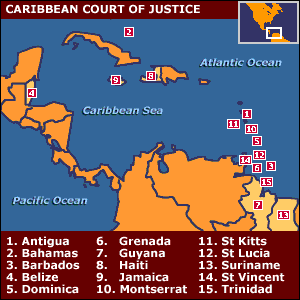 Every year a dozen Death Row prisoners have their final appeals heard by the Privy Council - a panel of senior judges - in London. Next year a new Caribbean Court of Justice will have replaced it. But as BBC News Online's Chris Summers discovered, there are concerns it will become a "hanging court". In November 1965 capital punishment was abolished by the Parliament of what was, at the time, the British Empire.
But it only applied to the home countries and the death penalty remained on the statute books of many colonies when they obtained independence. Four decades later there is no sign of Jamaica, Trinidad & Tobago or any of the other former colonies in the Caribbean planning to follow the mother country's example. Quite the opposite, in fact. At present the Privy Council's judicial committee in London acts as the "appeal court of last resort" to prisoners on Death Row. But ever since 1970 there have been plans to set up a Caribbean Court of Justice (CCJ) to replace the Privy Council. In July the 15 members of the Caribbean Community (Caricom) applied for a $100m (�62m) loan to set up a the CCJ.
She pointed out the CCJ would be more than just a criminal appeal court. It would also adjudicate in commercial disputes related to the Treaty of Chaguaramas, which set up Caricom's Single Market in 1973. 'Hanging court' But critics fear it will become a "hanging court", with judges appointed by governments keen to clear their Death Rows and appear tough on crime to voters. Edward Fitzgerald QC, who represents many Death Row prisoners at the Privy Council, said: "I can see the logic in the long term but for the moment human rights are in safer hands at this distance."
But a spokesman for the Jamaican Attorney General's office said: "It has not been instituted in order to make sure that people are hanged." Shelagh Simmons runs a UK pressure group, Caribbean Justice, which campaigns for the repeal of the death penalty. She said: "The CCJ has been on the agenda for a long time but things seems to have moved on apace since the Privy Council began handing out rulings which annoyed the governments of Jamaican, Barbados and Trinidad."
The Law Lords ruled it was inhumane for prisoners to wait more than five years on Death Row. As a result anyone waiting that long automatically gets their sentence commuted to life. But the Pratt and Morgan case, and others like it, were received angrily by politicians and the public. Ms Simmons, who has visited Jamaica several times, said: "They do have an appallingly high level of crime. "People live in fear and when they live in fear they want action and that often means the death penalty. "A lot of politicians are against the death penalty but they wouldn't dare say so in public." 'Due process' Campaigners also fear the CCJ would be less likely to overturn the convictions of men such as Randal Dixon and Mark Sangster. Earlier this month the Jamaican pair had their convictions quashed by the Law Lords, who were shown CCTV footage of the robbery which showed neither Dixon or Sangster. It had not been available to the defence.
He said: "It's high time we had our own final court of appeal. "Jamaica will never complain if the Privy Council overturns convictions because the evidence is lacking, but when they manufacture things like the five-year delay to prevent executions, to us it's garbage." He highlighted the case of Desmond and Patrick Taylor and Steven Shaw who slaughtered a whole family, chopped them up and were heard to gloat afterwards. Their death sentences were commuted by the Privy Council because of a technicality in the way their petitions for mercy were handled.
Caricom's CCJ project co-ordinator, Sheldon McDonald, said: "The CCJ will be the only tribunal of its kind anywhere in the world which will have judges who will not be chosen by national governments. "The bench will be appointed by a treaty-created Regional Judicial and Legal Services Commission made up of persons chosen by the private Bar, civil society and the legal academic community." Barbara Gayle, a crime reporter with The Gleaner newspaper, said the Jamaican public were in favour of hanging. But the Jamaican Opposition's spokesman on justice, Delroy Chuck MP, said his party was against replacing the Privy Council's role. He told BBC News Online: "Our justice system here in the Caribbean has not been functioning as well as it should...and it does not make sense to replace the Privy Council with another layer of Caribbean justice." | | See also:  27 Nov 02 | Americas 06 Jul 02 | Americas 08 Jun 99 | Americas 26 May 99 | UK 15 Feb 01 | Americas 14 Sep 00 | Americas 28 Jul 99 | Americas 16 Oct 98 | Americas Internet links: The BBC is not responsible for the content of external internet sites Top Americas stories now: Links to more Americas stories are at the foot of the page. | ||||||||||||||||||||||||||||||||||||||||||||||||||||||||||||||||||||||||||||||||||||||||||||||||||||||||||||||||||||||||||||||||||||||||||||||||||||||||||||||||||||||
| |
|  E-mail this story to a friend E-mail this story to a friend |
| |
| Links to more Americas stories |
| | | ||
 | ||||
 | | Back to top
| ||
| ---------------------------------------------------------------------------------- To BBC Sport>> | To BBC Weather>> | To BBC World Service>> ---------------------------------------------------------------------------------- © MMIII | News Sources | Privacy |