|
 |
 | | | | | | ||||||||||||||||||||||||||||||||||||||||||||||||||||||||||||||||||||||||||||||||||||||||||||||||||||||||||||||||||||||||||||||||||||||||||||||||||||||||||||||||||||||||||||||||||||||||||||||||||||||||||||||||
| | | You are in: Americas | ||||||||||||||||||||||||||||||||||||||||||||||||||||||||||||||||||||||||||||||||||||||||||||||||||||||||||||||||||||||||||||||||||||||||||||||||||||||||||||||||||||||||||||||||||||||||||||||||||||||||||||||||||
|
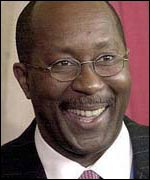
| | Friday, 1 November, 2002, 13:59 GMT Democrat sparkles in Lone Star state 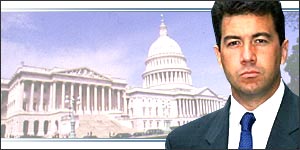 BBC Washington correspondent Nick Bryant details the race for senator in Texas, where Ron Kirk, an African-American Democrat has a chance of becoming the South's first black senator since 1879. Ron Kirk is something of a political oddity. A black Southern Democrat, running for a seat in the United States Senate, who, if the latest polls are to be believed, appears to stand a realistic chance of breaking the Republican's stranglehold on the Lone Star state.
When the campaign season began, the Democrats had high hopes for Kirk, a business-friendly centrist, who made his name as the mayor of Dallas. A racial firebrand he is not, and unlike many black leaders in America, the roots of his political career are not found in the civil rights movement of the 1960s. New generation Instead, Mr Kirk finds himself in the forefront of a new generation of black leaders - serious-minded technocrats, with strong records of accomplishment, whose political appeal is based on the ability to deliver high-quality public services rather than demagogic speeches. Mr Kirk, an exuberant character who was born to run for office, did just that during his seven years as mayor.
He says he helped bring 45,000 new jobs to Dallas, to have led the campaign for a new $125m downtown sports arena, which prevented the Dallas Mavericks basketball team from leaving town, and boosted spending on the local police by almost 40%.
The irony is that the Kirk campaign suffered its worst moment when it tried to inject race into the election battle. Speaking to a black veterans group in San Antonio in September, he said that war with Iraq would mean sending a lot of soldiers "who look like us" into battle. He seemed to be suggesting that more minorities would die than whites, and later issued an embarrassing apology. This from a politician who told the Dallas Morning News that his aim during the campaign was to persuade voters "to forget the black stuff". For a politician who sets such great store in his vote-winning capabilities in white suburbs, the other great irony is that his main hope of victory depend on a huge turn-out among black and Hispanic voters. Almost 12% of the state's 20 million citizens are black, and about 30% are Hispanic. The Latino turn-out is certain to be high because the Democratic candidate for Governor is Tony Sanchez, a Mexican-American millionaire. Some are calling it 'the rainbow ticket'. Racial breakthrough If Mr Kirk was to win - and most polls show him trailing the Republican candidate, State Attorney John Cornyn, by at least seven points - he would become the South's first black Senator since 1879 and only the third nation-wide since the end of Reconstruction, the period of racial reform which followed the American Civil War. In a country where 12% of the population is black, there are no African-Americans in the nation's upper chamber. The most recent, Carol Moseley-Braun, was dumped by the voters of Illinois in 1998, after serving just one term in the Senate. Even to have won the party's nomination marks something of a racial breakthrough. It was not until 1944, when the US Supreme Court outlawed the notorious 'white primary', that black voters in Texas could even help choose the nominee. History of segregation And as recently as the mid-1970s, the Democratic Party in the South was the political home to notorious segregationists like Mississippi Senator James Eastland.
After all, when Mr Kirk was born, in late-1950s Austin, Texas was still a segregated society. The 48-year-old Mr Kirk may have been too young to take part in the civil right movement. He may well have little in common with the 'take it to the streets' leaders of the 1960s. But his emergence represents a major breakthrough in the ongoing struggle for black equality. If he won next Tuesday, millions of middle class black Americans would have a new standard-bearer. And 12% of the country's citizenry would again see a face in the Senate 'that looks like them'. Campaign diary | |
See also:  29 Oct 02 | Americas 14 Oct 02 | Americas Top Americas stories now: Links to more Americas stories are at the foot of the page. | ||||||||||||||||||||||||||||||||||||||||||||||||||||||||||||||||||||||||||||||||||||||||||||||||||||||||||||||||||||||||||||||||||||||||||||||||||||||||||||||||||||||||||||||||||||||||||||||||||||||||||||||||
| |
|  E-mail this story to a friend E-mail this story to a friend |
| |
| Links to more Americas stories |
| | | ||
 | ||||
 | | Back to top
| ||
| ---------------------------------------------------------------------------------- To BBC Sport>> | To BBC Weather>> | To BBC World Service>> ---------------------------------------------------------------------------------- © MMIII | News Sources | Privacy |