|
 |
 | | | | | | |||||||||||||||||||||||||||||||||||||||||||||||||||||||||||||||||||||||||||||||||||||||||||||||||||||||||||||||||||||||||||||||||||||||||||||||||||||||||||||||||||||||||||||||||||||||||||||||||||
| | | You are in: Americas | |||||||||||||||||||||||||||||||||||||||||||||||||||||||||||||||||||||||||||||||||||||||||||||||||||||||||||||||||||||||||||||||||||||||||||||||||||||||||||||||||||||||||||||||||||||||||||||||||||||
|
| | Thursday, 31 October, 2002, 10:27 GMT Redistricting: Winners and losers 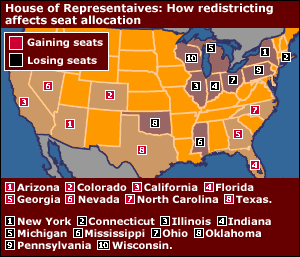
Every 10 years the US House of Representatives is reshaped after the census reveals population shifts. The process is called redistricting, and is similar to the work of the Boundary Commission in Britain. Under the US Constitution, there must be 435 representatives, with each state having at least one seat. For the last 40 years, the US population has been shifting south and west, giving more seats to the "Sun Belt" states like Florida, Texas, Arizona, and California. Large northern states like New York, Pennsylvania, and Ohio have been losing population and seats - a process which has broadly favoured the Republicans, who have been more popular in the Sun Belt than the so-called Rust Belt. Big gainers The 2002 mid-term elections are the first to be fought on the new boundaries mandated by the 2000 census returns. And the states that are gaining extra House seats are again in the Sun Belt. They include Arizona (2 seats), Colorado, California, Florida (2), Georgia (2), Nevada, North Carolina and Texas (2). All except California were carried by George W Bush in the 2000 presidential election.
And the states losing population and seats are predominately Democratic. They include New York (2 seats), Connecticut, Illinois, Indiana, Michigan, Mississippi, Ohio, Oklahoma, Pennsylvania (2 seats) and Wisconsin. State legislatures crucial So the redistricting changes should give the Republicans some advantage. But if that advantage is to materialise, the actual districts - which are drawn up by the State legislatures - must translate that theoretical advantage into actual seats. As it happens, the Republicans also control most of the legislatures in both Sun Belt and Rust Belt seats which are being redrawn. That has given them an even bigger advantage, both in fast-growing states like Texas and Georgia and in some northern states like Pennsylvania and Michigan. For example, the seat of the one of the key Democrats from Michigan - John Dingell - has been combined with a rival Democrat, forcing a difficult contest. However, in California the Democrats control the redistricting plan, and may turn a 32-20 advantage in Congressman to a 35-18 advantage (the state gains one seat.) They may force a similar run-off in some southern California seats, although the California Democrats also look set to lose one seat - that of rogue Congressman Gary Condit, who has been accused of having an affair with an aide who was subsequently murdered. Deadlock In general, though, redistricting has not shaken up things as much as expected. That is because, like many other aspects of the US electoral system, it has generally favoured the incumbents. For example, in New Jersey the two open seats have been both structured to become more Republican in one case and more Democratic in the other. Most experts believe that only 50, and perhaps as few as 30 of the 435 House seats up for grabs have genuinely competitive races. That is one reason for lower voter turnout - and it has also increased the importance of those few seats where the boundaries have substantially changed. Crucial votes There is one special exception to the redistricting rules. Since the 1970s, the courts have ruled that the states are allowed, and in some cases, required, to redraw boundaries so as to encourage black majority seats, in order to increase the number of black members of Congress. Most of these seats are in the southern states or in the large northern cities. Hispanic Americans, who now outnumber African Amerians as the biggest minority group in the US, are pressing for similar moves to create Hispanic majority seats. This has not happened yet, but Hispanic votes could be crucial in at least nine competitive House seats in Arizona, California, Colorado, Nevada, New Mexico, North Carolina and Texas. | |
Top Americas stories now:  Links to more Americas stories are at the foot of the page. | |||||||||||||||||||||||||||||||||||||||||||||||||||||||||||||||||||||||||||||||||||||||||||||||||||||||||||||||||||||||||||||||||||||||||||||||||||||||||||||||||||||||||||||||||||||||||||||||||||
| |
|  E-mail this story to a friend E-mail this story to a friend |
| |
| Links to more Americas stories |
| | | ||
 | ||||
 | | Back to top
| ||
| ---------------------------------------------------------------------------------- To BBC Sport>> | To BBC Weather>> | To BBC World Service>> ---------------------------------------------------------------------------------- © MMIII | News Sources | Privacy |